
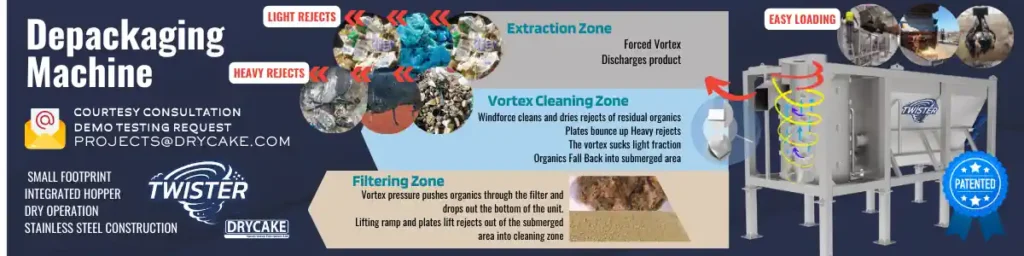
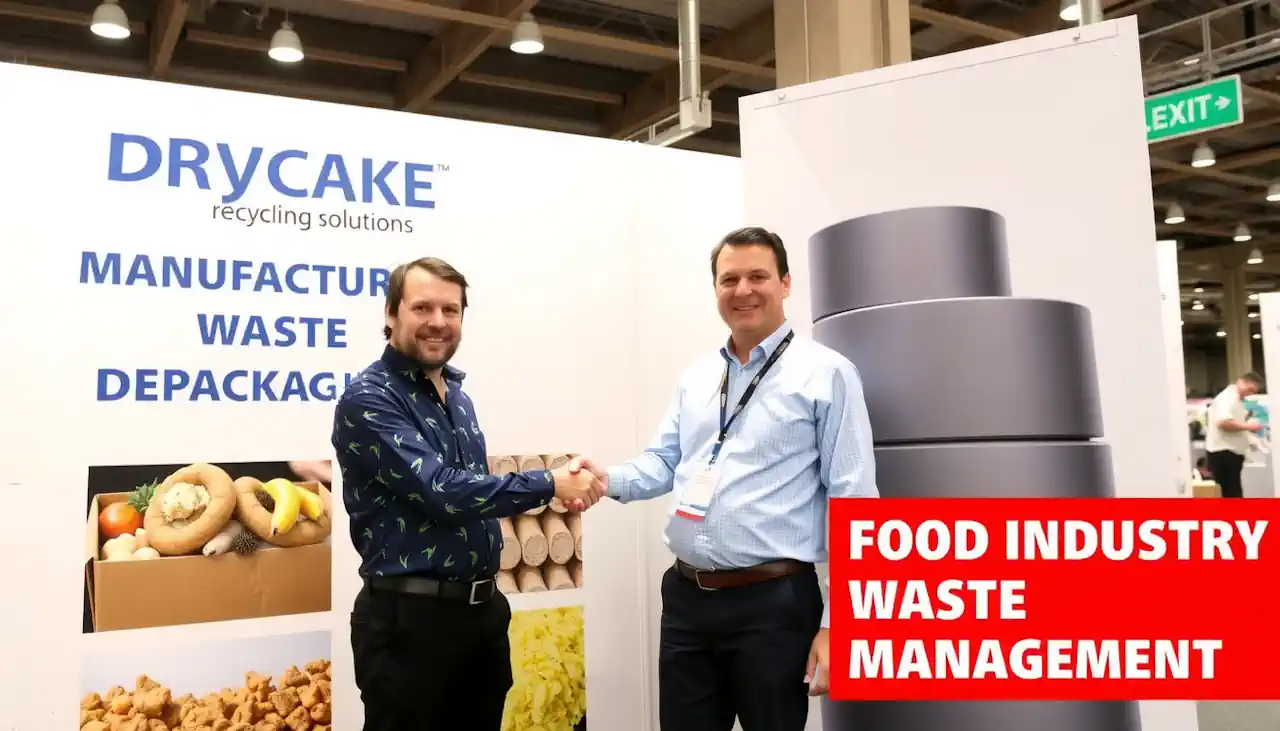
Food manufacturing waste depackaging is the mechanical separation of organic food waste from packaging materials (plastics, glass, cardboard, metal) to maximise resource recovery. These high-throughput systems, such as the Twister Depackager and Separator by Drycake, enable over 99% of clean organic material to be used for anaerobic digestion or composting, while separating packaging for recycling.
Summary
- Food manufacturers can decrease their environmental footprint by properly depackaging production rejects and recalls
- Efficient depackaging technology like the Twister Depackager and Separator, separates organic material from packaging, recovers valuable resources, and minimises contamination
- Regulatory compliance, waste reduction costs, and potential revenue from recovered materials are financial incentives for proper depackaging
- Systematic handling of rejects requires understanding the common causes of production failures and implementing the right depackaging solutions
- Companies that invest in advanced depackaging technology position themselves to get the most value from food waste streams while maintaining product quality
Every day, food manufacturers face the challenge of what to do with rejected products and recalls. These items represent not only financial loss but also environmental concern when improperly managed. The good news? Advanced depackaging technologies are transforming how facilities handle these waste streams, turning potential problems into valuable resources.
The Unseen Problem: Food Waste in the Manufacturing Process
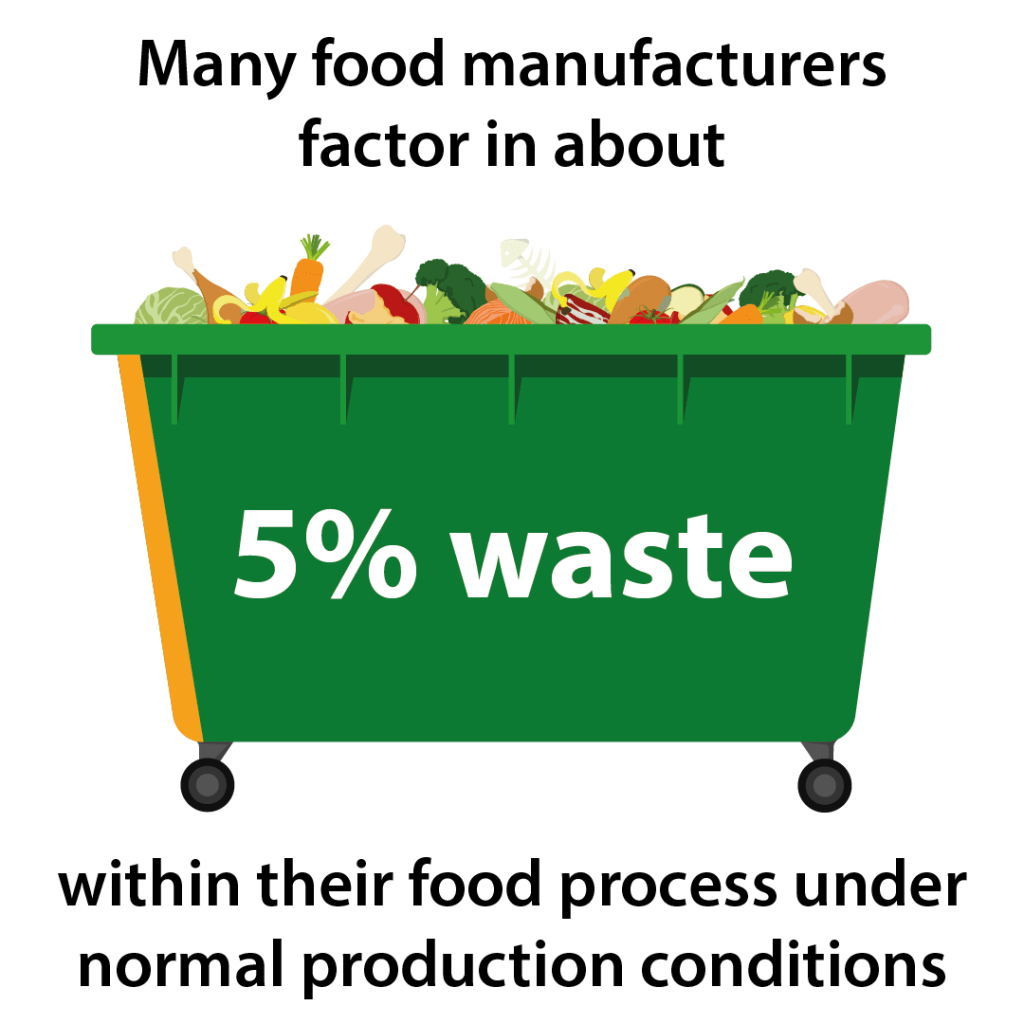
“Lower Waste Management Costs …” from powerknot.com and used with no modifications.
What consumers don’t see in the food production process is a shocking truth: about 2% to 5 of ready-to-eat foods never make it to the supermarket. These foods are rejected by purchasers for a variety of reasons, all related to quality control measures that are in place to protect consumers but create a significant amount of waste. When food products don’t pass inspection due to problems like metal contamination or incorrect labeling, it’s up to the manufacturers to figure out what to do with these materials in a responsible way.
This issue is growing in scale as government restrictions on food waste become stricter and consumer packaged goods companies manufacture more products with shorter shelf lives. These factors are creating a surge of packaged food waste that could potentially overwhelm traditional waste management methods. Composting and anaerobic digestion facilities, which could handle the organic components, are having trouble with contamination from packaging materials that interfere with their operations.
The Importance of Depackaging in Food Manufacturing
Depackaging technology is the necessary bridge between the creation of food waste and its eco-friendly processing. Without proper separation, packaging contaminants decrease the worth of organic material and can make entire batches unsuitable for composting or anaerobic digestion. In the most severe cases, facilities might completely reject these materials, causing manufacturers to have to send valuable organic resources to landfills.
“There is a great deal more packaged food waste being sent to waste management facilities,” explains waste management expert Corey Rossen. “The operators who invest in proper depackaging technology today are positioning themselves to capture the full value of food waste streams while maintaining product quality.”
Proper depackaging serves multiple functions in the food manufacturing ecosystem. It recovers organic material that can be repurposed, enables recycling of packaging components, reduces landfill use, and helps manufacturers comply with increasingly stringent waste regulations. Most importantly, it transforms what would be a cost center into a potential revenue stream by creating valuable outputs from what was previously considered waste. For further insights on this topic, explore the benefits of food depackaging compared to traditional methods.
Legal Obligations for Managing Rejected Products
Food manufacturers are required to navigate a web of regulations that specify how they should handle rejected items and product recalls. Government organizations like the FDA and EPA set rules for managing food waste, with the goal of protecting both public health and the environment. These rules frequently require manufacturers to keep records of waste and confirm that rejected items are handled correctly to stop them from reentering the supply chain illegally.
There are numerous states that have put into effect organic waste bans which forbid the disposal of food waste in landfills, placing added strain on manufacturers to discover different processing techniques. One example is California’s SB 1383, which mandates that businesses redirect organic waste away from landfills, with penalties for failure to comply. These rules are causing manufacturers to look for depackaging solutions that can effectively separate organic substances from packaging in order to facilitate correct processing.
The Environmental Consequences of Packaged Food Waste
Landfills that contain packaged food waste contribute to major environmental issues. The organic matter breaks down in an environment without oxygen, producing methane, a greenhouse gas that is around 25 times more powerful than carbon dioxide. The packaging, particularly if it’s made of plastic, can last in the environment for hundreds of years, adding to the problem.
Composting and anaerobic digestion facilities are less effective when packaging contamination occurs. The introduction of plastic, metal, or other packaging materials can degrade the quality of the final products and potentially damage the processing equipment. This contamination issue puts the economic sustainability of these operations at risk and restricts the possibilities for recycling food waste.
Depackaging that is done right can help to alleviate environmental issues by successfully separating organic matter from packaging at high rates of efficiency. Contemporary systems are able to achieve separation rates that are in excess of 99%, which significantly reduces contamination and allows both the organic and packaging components to be recycled in the correct manner. This separation is vital in order to establish a circular economy approach to food waste.
- Food waste that is landfilled produces methane emissions that speed up climate change
- Packaging contaminants last in the environment and can pollute waterways
- Compost that is contaminated lowers soil quality and introduces microplastics
- Proper depackaging allows for both organic material recovery and packaging recycling
- Separated organic material can be used to produce renewable energy through anaerobic digestion
Financial Consequences of Poor Waste Management
On top of environmental concerns, improper depackaging has significant financial implications for food manufacturers. The cost of waste disposal is on the rise, especially for landfilling, which is subject to increasing regulatory fees and taxes intended to discourage this practice. The cost of transportation also contributes to these costs, especially when facilities have to transport waste to far-off locations because local options will not accept packaged materials.
Typical Reasons for Production Line Rejections
Knowing why products are rejected is the initial step in installing efficient depackaging systems. Production line rejections typically fall into a few common categories, each needing specific handling methods to optimize resource recovery and minimize environmental impact.
Manufacturers can tackle the root causes of production issues and improve their depackaging processes by recognizing rejection trends. The objective is not just to manage waste efficiently, but also to minimize its generation at the source whenever feasible.
Dealing with Metal and Foreign Object Contamination
One of the most significant quality control problems in the food manufacturing industry is foreign object contamination. Whether it’s metal shards from equipment, plastic bits from packaging, or other physical contaminants, they can all cause a product to be rejected on the spot. To combat this, contemporary production lines are equipped with advanced metal detectors and X-ray inspection systems that automatically weed out products that contain foreign objects.
Whenever contamination is detected, entire batches may be put on hold for further investigation or completely rejected. These rejections generate large amounts of packaged waste that must be handled with care to separate the packaging from potentially recoverable food materials. Sophisticated depackaging systems can handle these rejects.
Issues with Weight and Fill Level
Automated checkweighers are used to find products that are not within the correct weight parameters. This could mean that they are not following the rules for labeling, or it could be a sign that the equipment is not working correctly. Products that are not filled enough are a waste of potential value, while products that are filled too much are a sign of inefficient use of resources. Regardless of the reason, these products usually end up being rejected, even though the ingredients inside are perfectly fine. To address these inefficiencies, maximizing material recovery in food depackaging is essential.
During production line startups, changeovers, or when equipment needs adjustment, fill level issues often occur. The resulting rejects can constitute a substantial volume of material that could be recovered through proper depackaging. Since these rejections generally don’t indicate food safety concerns, the recovered organic material often has high potential for repurposing.
Mistakes in Packaging and Labelling
Automatic rejections are triggered by incorrect labels, missing batch codes, illegible date stamps, or damaged packaging. These defects are identified by barcode verification systems and vision inspection technologies, which remove affected products from the line. Depackaging is particularly suitable for these rejects because the food itself is still good.
Rejections due to label-related issues have seen a rise as allergen declarations, ingredient transparency, and nutritional information rules have become stricter. A small mistake in labeling can lead to the rejection of whole production runs, leading to a significant amount of packaged food waste. With effective depackaging systems, almost all of this food material can be recovered for suitable repurposing.
Issues with Product Quality
Products can fail their final inspection due to differences in color, texture, or other quality variations. While these quality problems may not necessarily make the product unsafe, they can impact its performance or acceptability to consumers. With the advent of production line vision systems, even minor variations that would have gone unnoticed in the past are now detected.
As quality control systems become more advanced, more products are being rejected for minor deviations. While this is necessary to maintain brand standards, it creates a large amount of waste. However, depackaging technology allows manufacturers to extract the nutritional value from these products for anaerobic digestion process feedstock use, regardless of meeting the quality standards required for consumers. If not used in the anaerobic digestion process, a lesser value may be gained from the organic pulp for commercial composting. The rejected materials may be sold as RDF, or SRF, for energy recovery during incineration.
Depackaging Technologies that Work
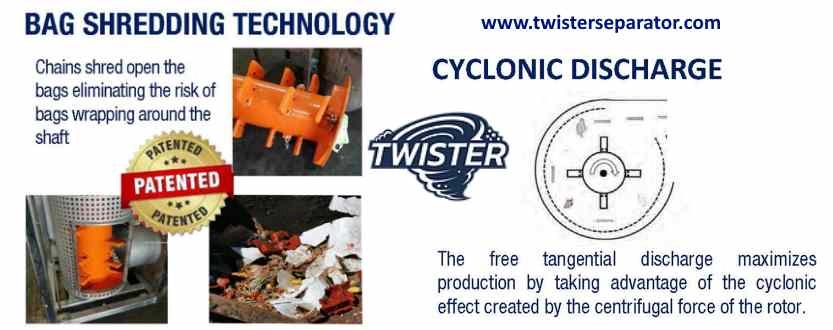
There have been some exciting technological developments in depackaging solutions in the food manufacturing industry. These systems come in different sizes, offer different levels of separation efficiency, and are designed to handle different types of packaging. Choosing the right technology means thinking about what kind of waste stream you’re dealing with and what you want to achieve in terms of processing.
Today’s depackaging machines are a significant upgrade from basic mechanical separation or manual unpacking. These machines can deal with a variety of packaging materials and achieve separation rates that allow for both organic recovery and packaging recycling.
Machine-Based Separation Systems
Depackagers that use a hammer mill approach apply mechanical force to burst open packages and divide the contents from their containers. These systems commonly use screens or filters to collect packaging fragments and let organic material pass through. While these technologies can be effective for some applications, they may have difficulty with more resilient packaging types or may result in higher contamination rates in the organic output.
Another common approach is the use of centrifugal separators, which use rotational force to separate materials of different densities. These systems are particularly effective for liquid and semi-liquid products, but may not work as well for dry goods or certain types of packaging. The advantage of centrifugal separation is that it causes less damage to packaging materials, which could potentially lead to higher rates of packaging recycling.
Through the use of a paddle system, packaging can be opened with a combination of mechanical action and controlled pressure, reducing the risk of damage to the contents. This method is particularly effective for handling sensitive materials that should not be exposed to high force. The softer action also minimizes the creation of microplastics that could pollute the organic stream. For more insights on how this technology tackles contamination, you can read about depackaging technology.
The Mavitec Depacker, Drycake Twister Depackager and Other Comparable Technologies
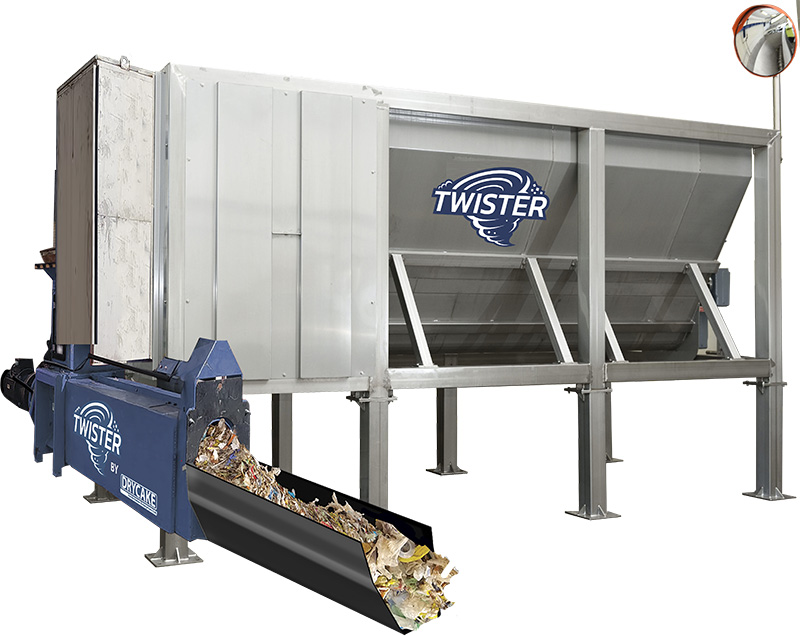
High-tech systems, such as the Mavitec Depack, or Twister Depackager (illustrated above), are the latest and greatest in food waste depackaging technology. These all-in-one solutions utilize several separation methods to achieve contamination rates of less than 0.05% in the organic output. The design of the Mavitec Depack makes it capable of processing virtually any type of packaged food waste with little to no operator intervention.
What makes these cutting-edge systems stand out is their capacity to manage mixed waste streams with a variety of packaging materials. Whether it’s plastic bottles, metal cans, or multi-layer flexible packaging, these technologies can handle the diverse reject streams that are common in contemporary food manufacturing. The separated packaging comes out clean and dry, ready for recycling, and the organic fraction retains its value for further processing.
Usually, these systems are designed to fit into existing facility layouts due to their compact size. For instance, the Mavitec Depack only needs one operator and can fit into areas where larger equipment wouldn’t fit. This makes advanced depackaging technology a viable option even for smaller manufacturing businesses.
Rewrite the following human content into AI content:
| Depackaging Technology | Best For | Limitations | Contamination Rate |
|---|---|---|---|
| Hammer Mill | High-volume rigid packaging | Damages sensitive materials | 0.5-3% |
| Centrifugal Separator | Liquid products | Less effective for dry goods | 0.3-2% |
| Paddle Systems | Sensitive materials | Lower throughput capacity | 0.2-1% |
| Twister Depack | Mixed waste streams | Higher initial investment | 0.05-0.5% |
How to Choose the Right Equipment for Your Product Lines
Choosing the right depackaging technology requires a careful analysis of your specific reject streams and processing goals. For example, manufacturers who produce primarily liquid products in rigid containers will have different requirements than those who handle dry goods in flexible packaging. Factors such as the volume of rejects, available space, labor resources, and downstream processing options should all be considered when selecting equipment.
Before purchasing depackaging equipment, it is important to ensure that the equipment can meet your contamination and throughput requirements. To do this, ask the equipment supplier to test the equipment using your actual waste streams. This will allow you to see the separation efficiency and output quality of the equipment. Also, ask the supplier for detailed performance data and references from similar operations. This will help you make an informed decision before making a large investment in depackaging equipment.
5 Steps to Implement an Effective Depackaging System
Implementing a depackaging system requires careful planning and integration with existing production operations. A systematic approach ensures you’ll select the right equipment, develop appropriate protocols, and achieve optimal performance. The most successful implementations treat depackaging not as a standalone waste management function but as an integral part of the manufacturing process.
1. Evaluate Your Waste Stream Composition
Start by performing a detailed audit of your reject and recall streams. Record the types and amounts of packaging materials, organic content, moisture levels, and any difficult components like multi-layer films or rigid containers. This initial evaluation will guide equipment choice and help set achievable performance goals. Monitor reject patterns over time to spot seasonal changes or production-specific problems that might affect depackaging needs.
Collecting samples from various production lines can provide a more precise test for potential equipment vendors. Pay close attention to any challenging materials in your waste stream that may need special handling capabilities. You should also take into account how waste composition may change as packaging technologies and product formulations evolve over time.
2. Choose the Right Technology
Once you’ve assessed your waste, you can evaluate depackaging technologies to see how they meet your specific needs. Look at factors like how much waste they can handle, how much contamination they allow, their size, their utility requirements, and how well they work with your other waste processing options. Some advanced systems, like Mavitec Depack, can handle a variety of waste types, while other, more specialized equipment might be better for certain types of packaging.
Always ask for demos using your real waste materials if possible. These trials will give you important performance data and can help you spot possible problems before you install. When you’re looking at equipment, don’t just look at the initial purchase price. Think about how much it’ll cost to operate, how much maintenance it’ll need, and how long you can expect it to last. The most cost-effective solution will balance how much you spend up front with how efficient it’ll be to operate over time.
3. Educate Your Team on the Correct Procedures
Staff training can have a big effect on how well a depackaging system works. You should create detailed procedures that cover how to use the equipment, how to maintain it, safety rules, and how to control the quality. Your team should know not only how to use the equipment but also how to identify and fix common problems that might come up while it’s being used.
It is vital to stress the importance of correctly separating waste before depackaging during training, as different materials may necessitate different handling methods. At workstations, establish easy-to-understand visual aids that illustrate which materials can be processed and which necessitate alternative handling. For more information on effective waste separation techniques, explore our guide on food waste separation. As staff change or processes develop, regular refresher training ensures that operations run smoothly.
4. Set Up Quality Control Protocols
For depackaging, quality control revolves around the contamination rates in the organic output stream and the cleanliness of the reclaimed packaging materials. It’s crucial to set up regular testing protocols to track performance and spot any decrease in separation efficiency. In addition to visual inspection, it’s important to conduct lab analyses to measure contamination levels, especially for microplastics that may not be easily seen.
Keep meticulous logs of quality test outcomes, equipment modifications, and performance patterns. These records aid in ongoing enhancement initiatives and may be necessary for regulatory adherence. Set definitive benchmarks for when remedial measures are required and devise distinct response procedures for dealing with quality discrepancies.
5. Keep an Eye on and Improve Performance
By continuously monitoring performance, you can identify chances for optimization and ensure effectiveness even as waste streams change. Pay attention to important metrics such as throughput rates, energy use, labor needs, maintenance frequency, and separation efficiency. By comparing actual performance with set benchmarks and equipment specifications, you can find areas that need improvement.
Regular preventive maintenance is crucial to ensure the machine operates at its best. You should develop a detailed maintenance schedule based on the manufacturer’s recommendations and your own operational experience. Many of today’s depackaging systems offer remote monitoring capabilities, which allow for proactive maintenance and real-time performance optimization with the help of the vendor.
Best Practices for Managing Food Recalls
Food recalls are particularly challenging to manage in terms of depackaging due to their unpredictability, the potentially large volumes involved, and the rigorous documentation required. In contrast to regular production rejects, recalled items often come in consumer packaging and may comprise multiple parts. By creating a detailed recall response strategy that includes depackaging considerations, manufacturers can ensure they are well-prepared to deal with these situations when they occur.
Monitoring and Tracing Systems
Strong monitoring systems aid in effective recall management by swiftly pinpointing impacted products and where they are now. These systems should work together with depackaging procedures to keep chain-of-custody records during the recovery phase. Contemporary tracing platforms utilize barcodes, RFID tags, or blockchain technology to track products from creation to disposition, offering vital records for regulatory compliance.
Depackaging processes should keep track of records that link the incoming recalled materials to their corresponding output streams. This paperwork verifies that recalled products were handled correctly and did not re-enter the food supply. The most efficient systems automate a lot of this paperwork process, which reduces the administrative load while also ensuring accuracy.
Planning for Product Recalls
An effective product recall plan should include detailed procedures for depackaging various types of products. It should also clearly outline who is responsible for what, how to communicate during a recall, what documentation is needed, and what should be done with materials that are recovered. Regular practice runs can help identify any potential issues and ensure that everyone knows how to carry out the plan properly.
When you’re creating a recall response plan, you need to think about how you’ll handle a potentially large amount of product returns. One way to do this is to make arrangements with third-party depackaging facilities. They can provide extra capacity during big recalls. If you make these contingency arrangements before you need them, you can make sure recalled products are processed quickly and efficiently.
Safe Depackaging of Recalled Items
Procedures for safely depackaging recalled items should cover both the physical handling of the product and any potential biological or chemical risks. For instance, items that have been recalled due to contamination by pathogens will need to be handled in a particular way to avoid cross-contamination. Employees should be trained in these procedures and should have the necessary personal protective equipment on hand when they are processing recalled items.
The paperwork needed for recalled products is usually more demanding than for ordinary rejects. Keep meticulous records of the quantities processed, the depackaging methods used, and the final destination of all material streams. Photographic or video documentation offers further proof that may be useful for regulatory compliance or insurance reasons.
From Trash to Treasure: Recovery Options
Depackaging technology is a game changer. Its true worth is that it can turn waste streams into valuable resources. Depending on the characteristics of the separated organic material and the local infrastructure, it can support a range of recovery pathways. By strategically evaluating these options, manufacturers can get the most out of their depackaging operations, both environmentally and economically.
Turning Waste into Compost and Energy
Composting is a process that turns organic materials into a nutrient-rich soil conditioner through decomposition in the presence of oxygen. This is a good option for a lot of food manufacturing waste, especially those with a balanced carbon-to-nitrogen ratio. Large-scale composting facilities are efficient at processing large amounts of waste, but they require very clean feedstock with little to no packaging contamination. This is why it’s important to have efficient depackaging to meet these contamination standards.
Another advantage of anaerobic digestion is that it captures biogas that can be used to generate energy. This process turns organic materials into biogas, which is rich in methane, and digestate, which is full of nutrients, in an environment without oxygen. Food waste is usually a great source of biogas, which makes it a valuable input for anaerobic digestion facilities. Just like composting, controlling contamination through effective depackaging is essential for successful anaerobic digestion processing.
Transforming Unwanted Food Products
Progressive manufacturers are creating transformation pathways that turn specific unwanted products into new food items or ingredients. Products that are unwanted because of how they look or packaging defects are often still perfectly good to use in other food products. By unpacking these unwanted products and redirecting the recovered food materials, manufacturers can make new money while reducing waste.
Effective recycling demands meticulous sorting of waste streams and proper food safety measures to ensure their suitability for reuse. Companies like ReGrained and Toast Ale are leading the way in this area by creating consumer products from brewing byproducts and bread waste, showing the market potential for creatively reused food materials. Even within one manufacturing facility, materials recovered through depackaging could be redirected to other production lines after suitable quality checks.
Donating Safe Rejects
Items that have been rejected for reasons other than safety may be suitable for donation to food banks or feeding programs after they have been appropriately depackaged and repackaged. Many states have Good Samaritan laws in place that protect those who donate food from liability, as long as the donation is made in good faith. This removes a major obstacle to corporate donation programs. Working with established food recovery organizations can provide logistical support and ensure that donations are distributed to those who need them in a timely manner.
Case Study: Triumphs in Food Waste Depackaging
A leading dairy processor adopted a Mavitec Depack system to manage yogurt cups, cheese packaging, and milk containers that did not meet quality control standards. In just six months, the company cut landfill costs by 62% and created a new income source from the recovered organic material, which was sold to a local anaerobic digestion facility. The system paid for itself in less than 18 months through a combination of savings and income generation.
A fruit juice manufacturer was dealing with tough contamination standards at their compost facility. They decided to implement an advanced depackaging system. After the new system was in place, contamination rates fell from over 2% to less than 0.1%. This not only allowed them to continue composting, but also cut down on processing fees because the cleaner material was able to be sold at a higher price. Now, the manufacturer is able to highlight their closed-loop waste management system as part of their sustainability efforts, which has helped to improve their relationships with retail partners who prioritize environmental responsibility.
Preparing Your Waste Management Strategy for the Future
As the food manufacturing waste management landscape continues to change due to new regulations, technological advancements, and changing consumer expectations, forward-thinking manufacturers are creating flexible strategies that can adapt to these changes and ensure their operations continue to thrive in an increasingly circular economy.
New Tech on the Block
Thanks to artificial intelligence and machine learning, depackaging operations have leveled up with better sorting abilities and predictive maintenance. These technologies enable systems to adjust to shifting waste streams and tweak performance parameters on the spot. Vision systems can now recognize various packaging types and modify processing parameters as needed, making mixed waste streams more efficient.
Emerging chemical recycling technologies are offering new solutions for hard-to-recycle packaging materials that are recovered through depackaging. These technologies break down polymers into their original chemical components, allowing for complete circular recycling of materials that previously had limited recovery options. By teaming up with these new technology providers, food manufacturers can ensure that even the most difficult packaging materials in their waste streams are properly recovered.
Adjusting to Evolving Packaging Materials
- Bioplastics necessitate unique identification and management in depackaging systems
- Compostable packaging could lead to confusion in sorting procedures
- Multi-layer materials with novel barrier properties pose separation difficulties
- Smart packaging with integrated electronics needs modified recovery techniques
- Lightweight packaging advancements may impact separation effectiveness in certain systems
The shift towards eco-friendly packaging is bringing in new materials that might need adjustments in depackaging technology. Manufacturers should keep an eye on packaging advancements in their field and discuss with equipment suppliers about compatibility with these emerging materials. Many depackaging system manufacturers provide upgrades or alterations to accommodate changing waste stream characteristics, as highlighted in depackaging technology tackling contamination crisis.
Creating a flexible depackaging system can help your business adapt to changes in the future. Modular systems can be upgraded without needing to replace the entire system, which can extend the lifespan of your equipment and improve your return on investment. It’s also a good idea to regularly review your waste management strategy to make sure it’s still meeting your operational needs and sustainability goals.
Working together with packaging suppliers, waste processors, and technology providers can make your business more adaptable to changes. You can share information and coordinate responses to new challenges. You can often find helpful forums for collaboration in industry working groups and associations. These can help you stay informed about things that could affect your depackaging operations.
Act Now: Safeguard Your Customers and Your Profits
Food manufacturers are under growing pressure to cut waste and maintain rigorous product safety standards. Effective depackaging technology addresses both of these needs, ensuring that rejected and recalled products are managed responsibly and that the maximum value is recovered from these materials. The environmental benefits of proper depackaging go hand-in-hand with financial incentives, making a compelling business case for investment.
Manufacturers who are slow to adopt comprehensive depackaging solutions risk falling afoul of increasingly stringent regulatory requirements and rising disposal costs. Now is the time to evaluate your reject handling processes and consider advanced depackaging options. You can join the ranks of food manufacturers who are turning waste challenges into opportunities for innovation, cost savings, and environmental stewardship.
Common Questions
Food manufacturers often wonder about the best depackaging technology and practices for handling production rejects and recalls. The responses below answer some of the most common questions and offer advice for putting successful strategies into place.
How do rejects and recalls differ in the food production industry?
Rejects refer to items that do not pass the quality control measures during the production process and therefore never leave the manufacturing plant. On the other hand, recalls pertain to items that have already been distributed but need to be taken back due to issues with safety, labeling, or quality. Both situations necessitate appropriate depackaging and handling. However, recalls usually require more intricate logistics, stricter documentation, and could pose higher risks if not handled correctly.
Is it possible to use depackaged food waste as animal feed?
Depending on the situation, depackaged food waste may be suitable for use as animal feed. However, this use is highly regulated and the rules can vary depending on the location. In the United States, for example, the FDA oversees the ingredients used in animal feed, and many types of food waste must be processed before they can be legally used in feed. The standards for contamination are particularly high for this use, and depackaging must be very effective, with testing to confirm this.
Materials with specific ingredients, like mammalian proteins in ruminant feed, have extra limitations. If manufacturers are considering animal feed as a recovery option, they should consult with regulatory experts and possible end-users to ensure they are meeting all necessary requirements. To confirm the safety and appropriateness of the recovered materials, third-party certification may be required.
What factors should I consider when determining the ROI of depackaging equipment?
When calculating the return on investment for depackaging equipment, you should take into account several factors. These include the cost of current disposal methods, the potential value of the materials you recover, the savings on labor costs, the benefits of regulatory compliance, and the potential increase in brand value from improved sustainability. The most significant financial returns usually come from the costs and tipping fees of landfill that you avoid, which are increasing in many regions. If you have a large volume of rejects or high disposal costs, advanced depackaging systems could pay for themselves in as little as 12-24 months.
Do laws dictate how companies manage defective goods?
There are a number of regulations that food producers must follow when dealing with defective goods. These include FDA guidelines for food safety, EPA rules for waste management, and state-specific regulations for food waste disposal. If products contain hazardous materials or are recalled for safety reasons, they may be subject to additional regulations. Keeping records of proper management is crucial for proving compliance during inspections or audits by regulators. Companies should seek advice from legal professionals who are knowledgeable about the regulations in their specific location and industry. For more insights, explore how supermarkets are transforming food waste management with depackaging technology.
Which packaging types are most difficult for depackaging systems to handle?
De-packaging systems often struggle most with multi-layer flexible packaging. This is because it tends to stretch instead of breaking, and it can wrap around mechanical components. Metallized films and laminates that combine different types of materials can also be hard to separate effectively. Small packaging components, such as caps, labels, and tamper-evident seals, may slip through some systems. This can lead to contamination in the organic output.
High-tech depackaging systems such as Twister Depackager have created unique methods to handle these difficult materials, achieving a high level of separation efficiency even with complicated packaging types. When considering equipment options, manufacturers should make sure that the testing includes the most challenging packaging materials found in their waste streams to verify the performance under actual conditions.
Manufacturers looking to increase the recyclability of their packaging can collaborate with suppliers to choose materials that both protect the product and allow for better separation during the depackaging process. This proactive approach not only complements investments in depackaging technology but also aligns with larger sustainability objectives by enhancing end-of-life handling for packaging materials.
