
Depackaging Technology – Key Points
- Supermarkets can decrease the amount of food waste sent to landfills by up to 90% by using depackaging technology that separates organic material from its packaging.
- Current depackaging machines can process several tons of packaged waste per hour, with recovery rates of up to 99% for organic materials.
- Retailers that use depackaging systems are creating new revenue streams from recovered organics and significantly reducing waste disposal costs.
- Think Viably assists supermarkets in implementing effective depackaging solutions that are in line with sustainability goals and comply with increasing waste diversion regulations.
- The future of depackaging technology includes AI-powered sorting and real-time analytics that will further revolutionize how supermarkets manage food waste.
The Current Food Waste Crisis in Supermarkets
Supermarkets all over the country are dealing with a growing crisis that affects both their bottom line and the planet. Every day, thousands of pounds of expired products, damaged goods, and unsold inventory are taken off the shelves, creating a massive waste management problem that traditional disposal methods simply can’t handle effectively.
This isn’t just a supermarket problem—it’s a global environmental emergency that demands innovative solutions. As retailers seek more sustainable approaches to waste management, depackaging technology has emerged as a game-changing solution that’s transforming how the industry handles food waste.
“Food Loss and Waste – Food Tank” from foodtank.com and used with no modifications.
The Shocking Truth: Millions of Tons of Food Wasted Every Year
The amount of food that supermarkets waste is truly mind-boggling. Just in the United States, food waste from retail outlets comes to about 13.2 million tons every year, which is roughly 8% of all the food waste generated in the country. What’s really shocking about this is that most of this waste could still be used, if only it were properly separated from its packaging. Research from Think Viably shows that as much as 85% of the food waste from supermarkets could be kept out of landfills and turned into valuable resources like compost or biogas, if it were properly processed through depackaging systems. This is not just a chance to do something good for the environment, but it’s also a significant economic opportunity that some forward-thinking retailers are starting to take advantage of.
How Packaged Food Waste is a Unique Challenge
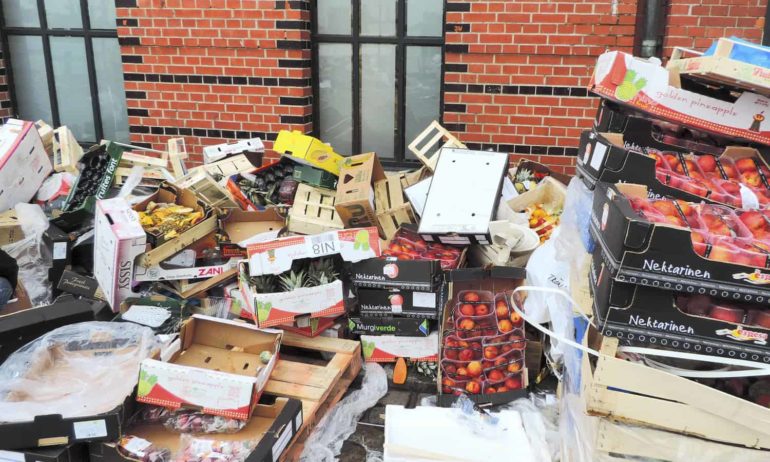
Supermarket waste is a special kind of problem that typical waste management solutions simply can’t handle. Unlike food waste from restaurants or homes, supermarket waste is usually still packaged in various materials—plastic containers, cardboard boxes, metal cans, glass bottles, and multi-layer film wrappings. Traditional composting facilities and anaerobic digesters can’t process these materials together, because the non-organic packaging makes the entire waste stream unsuitable for organic recycling. Because of this, supermarkets have historically had to send potentially valuable organic materials straight to landfills, where they create harmful methane emissions and leachate that can contaminate groundwater supplies. Learn more about how depacking machines improve the food composting process.
The Increasing Expense of Conventional Waste Disposal
Aside from the environmental implications, the financial strain of traditional waste management is becoming less and less feasible for retailers. Landfill tipping fees have seen an average increase of about 3.5% each year for the past ten years, with some areas experiencing even higher increases as the availability of landfill space decreases. For large supermarket chains, the cost of waste disposal can easily reach into the millions of dollars each year, taking a direct toll on already slim profit margins.
Financial strain is further increased by the rise of regulatory requirements in several states and municipalities that focus specifically on food waste diversion. For example, California’s SB 1383 requires a 75% reduction in organic waste disposal by 2025. Massachusetts, Connecticut, Rhode Island, Vermont, and New York have already put commercial food waste disposal bans in place for large generators. These regulatory trends are speeding up, making traditional disposal methods both more costly and potentially non-compliant.
What Is Depackaging Technology?
Depackaging technology is the vital component that has been missing in the food waste recovery process. This technology has automated a process that was once impossible or too costly to do manually: separating food waste from its packaging quickly and on a large scale. Today’s depackaging systems use complex mechanical processes that can effectively manage mixed waste streams that contain different types of packaging and food products at the same time.
Depackaging technology allows supermarkets to turn what used to be waste into two important, separate streams: clean organic material that can be composted or used in anaerobic digestion, and packaging materials that can often be recycled. This results in a huge decrease in the amount of waste that ends up in landfills, and it helps to make significant strides toward the goals of the circular economy.
The Process of Modern Food Depackaging
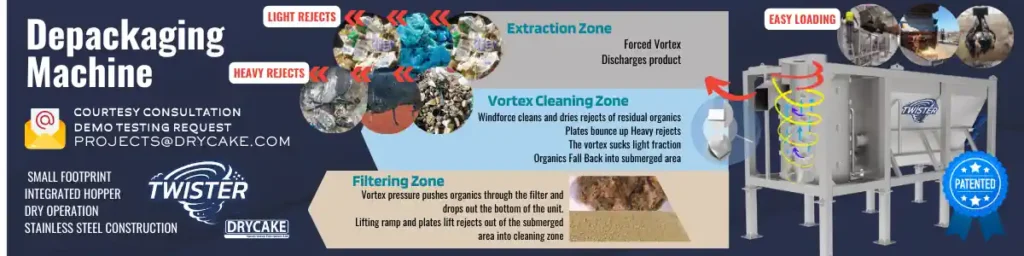
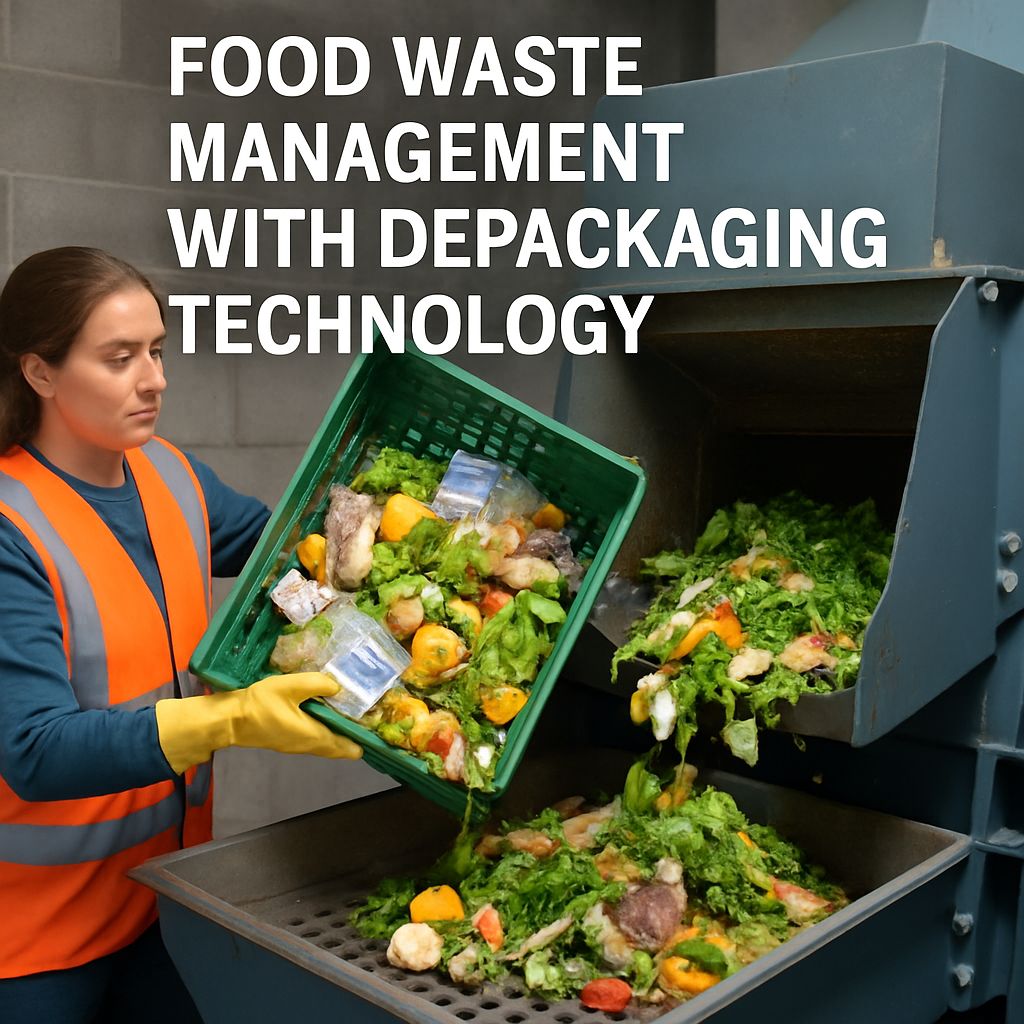
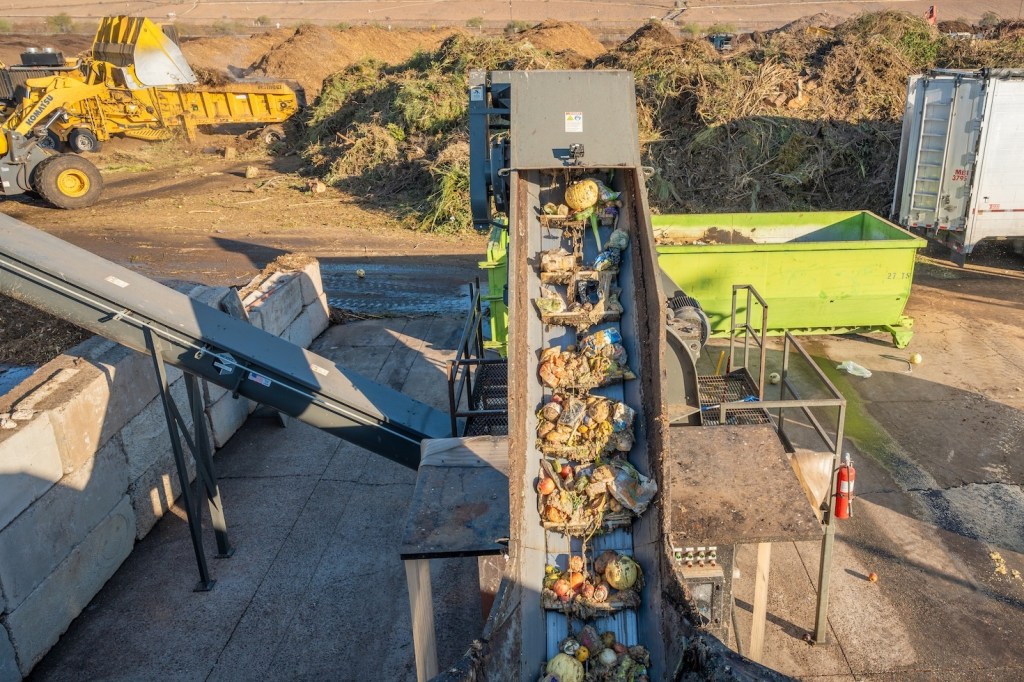
Modern depackaging machines are designed to employ a combination of mechanical forces, screening technology, and precision engineering to achieve what was previously impossible at a commercial scale. Most systems begin with a loading process where packaged food waste enters a processing chamber. Within this chamber, carefully calibrated paddles, hammers, or other mechanical components apply precisely controlled force to break open packaging without excessively pulverizing the contents. The liberated mixture then passes through specialized screens or separators that sort materials based on density, size, and physical properties. Organic material—now freed from its packaging—is collected separately from plastic, cardboard, metal, and other packaging components. The most sophisticated systems incorporate washing stages that further clean the organic fraction, achieving contamination rates below 0.5% of non-organic material—well within the acceptance thresholds of even the strictest composting or anaerobic digestion facilities.
Depackagers Used in Supermarkets
There are a variety of depackaging equipment available on the market today, each designed to handle specific waste stream characteristics. Horizontal depackagers are great at processing large volumes of similar materials and are often used in centralized processing facilities that serve multiple store locations. These systems can usually handle 5-10 tons per hour and are perfect for consistent waste streams. Vertical depackagers usually offer lower throughput (2-5 tons per hour) but provide better versatility for mixed waste streams that contain diverse packaging types. They are especially effective for individual stores with varied waste compositions.
Systems engineered specifically for liquid waste, like expired beverages, dairy products, and sauces, use centrifugal or filtration methods to reach separation rates that exceed 99% recovery of liquid content. For supermarkets that handle a large amount of bottled or canned beverages, these liquid-focused systems often offer the quickest return on investment. They efficiently recover high-value, easily processed organic material while also capturing recyclable packaging.
“Walmart turns its food waste into compost” from trellis.net and used with no modifications.
How Much Can Be Recovered: The Capabilities of Current Technology
The latest depackaging technology has broken down the barriers of what was once thought possible in terms of food waste recovery. The most recent models of these machines consistently reach organic material recovery rates of 95-99%, with contamination rates of less than 0.5% for non-organic material. This is a huge improvement from just five years ago, when a recovery rate of 80% was considered top-of-the-line. The technology is still improving at a rapid pace, with each new model increasing the amount of material processed, the energy efficiency, and the quality of the separation.
With this level of performance, supermarkets can now keep almost all of their food waste out of landfills, significantly reducing their environmental impact and opening up new avenues for profit. The economic viability of these systems has also improved, with the average return on investment period decreasing from over five years to just 18 to 24 months for high-volume applications.
5 Key Advantages Supermarkets Are Gaining
Progressive retailers who are introducing depackaging technology are finding a wide range of benefits that go much further than just reducing waste. These advantages make a strong business argument that simultaneously meets environmental, financial, regulatory, and brand positioning goals. The most forward-thinking supermarket chains are using these benefits to set themselves apart from the competition while also creating more robust, future-proof operations.
1. Cutting Down on Landfill Waste
One of the most noticeable and direct effects is the massive reduction in waste that ends up in landfills. Supermarkets that are using depackaging programs on a wide scale usually see a 70-90% decrease in the amount of waste they send to landfills. This leads to lower disposal costs, smaller carbon footprints, and major strides towards zero-waste goals that many stores have promised to meet. For big chains that produce hundreds of tons of food waste every month, this reduction is both a win for the environment and a chance to save a lot of money.
2. Organic Material as a Source of New Revenue
Many retailers are surprised to learn that what was once a cost can now be a source of income. Clean, depackaged organic material is valuable in today’s economy, where resources are highly valued. Composting facilities, anaerobic digestion plants, and agricultural operations often pay for high-quality food waste. Prices range from $15 to $50 per ton, depending on local market conditions and the quality of the material. For large supermarket chains, this source of income can generate hundreds of thousands of dollars annually. At the same time, it eliminates disposal costs. Learn more about the benefits of food depackaging in waste management.
3. Decreased Costs for Waste Disposal
Landfill tipping fees are on the rise, averaging $55-75 per ton nationwide, with regions like the Northeast seeing fees exceeding $100 per ton. This makes the financial benefits of depackaging even more appealing. By diverting the majority of food waste from landfills, supermarkets can reduce disposal costs by 60-80%. For an average supermarket that generates 2-3 tons of food waste every week, this could mean annual savings of $30,000-$45,000 per store. For chains with hundreds of stores, the total savings can be substantial, often reaching into the millions.
4. Achieving Sustainability Goals and Meeting Regulations
With the increasing regulatory pressure across the country, depackaging technology provides a solution that not only meets current requirements but also anticipates future ones. In addition to compliance, these systems aid supermarkets in reaching voluntary sustainability commitments, which are becoming more important in investor relations, corporate social responsibility reports, and competitive positioning. Many retailers have discovered that depackaging technology is the key to achieving their zero-waste-to-landfill goals, making them attainable rather than just aspirational.
There are environmental benefits beyond just waste diversion. If food waste is composted or digested anaerobically instead of being sent to a landfill, it can reduce greenhouse gas emissions by 5-10 times. This results in a significant reduction in a supermarket’s carbon footprint, helping it meet its climate commitments and participate in the emerging carbon markets.
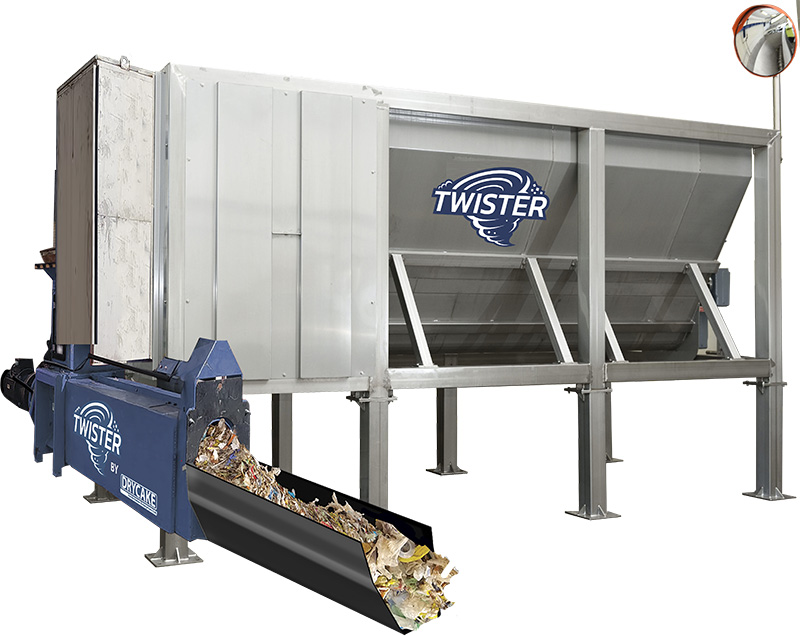
“Food Depackaging: The Systems | BioCycle” from www.biocycle.net and used with no modifications.
5. Enhanced Brand Perception and Customer Retention
Modern-day shoppers are more likely to consider sustainability when deciding where to shop. According to Nielsen research, 73% of consumers worldwide would certainly or possibly alter their buying habits to lessen their environmental footprint. Supermarkets can improve their public image and retain customers by openly tackling food waste, a problem that consumers feel strongly about. Many retailers that use depackaging technology use their sustainability efforts in their marketing messages, setting themselves apart in a crowded market.
These green credentials are particularly attractive to younger demographic groups, helping grocery stores draw in and keep these important customers who will make up their future customer base. As environmental awareness continues to grow across all consumer groups, investments in technologies like depackaging are increasingly being seen as strategic marketing assets.
True Triumphs: Grocery Stores Paving the Way
In the retail world, innovative grocery stores are showing how depackaging technology can truly revolutionize the industry. Their journeys offer useful roadmaps for other retailers who may be thinking about implementing similar programs, showcasing both the potential benefits and the best ways to implement these strategies for the best outcomes. These real-world examples show that the keys to success are about more than just choosing the right technology – they also involve getting staff on board, building strong relationships with partners, and taking a comprehensive approach to managing waste.
Tesco’s Path to Zero Food Waste
As one of the world’s leading food retailers, Tesco’s bold commitment to eradicate food waste provides an example of a comprehensive approach. At the heart of their strategy is the deployment of centralized depackaging facilities that serve regional store clusters. These facilities handle about 45,000 tons of packaged food waste every year, achieving organic recovery rates that exceed 95%. The recovered material is used in anaerobic digestion plants that produce renewable energy, creating a closed-loop system that turns waste into power. Tesco states that this initiative has cut their waste going to landfill by 80% while producing enough energy to power 4,200 homes all year round.
Whole Foods’ Waste Stream Transformation
Whole Foods Market has taken a store-level approach to depackaging, installing smaller-scale systems directly within individual stores. This decentralized approach cuts down on transportation costs and emissions while giving store managers a direct look at waste generation patterns. Their depackaging initiative has been bolstered by comprehensive staff training that emphasizes proper segregation of waste streams before processing. The result has been contamination rates below 0.3% in their recovered organic material, enabling partnerships with high-quality composting operations that supply local organic farms—many of which provide produce back to Whole Foods, creating a visible closed-loop system that resonates with their environmentally conscious customer base.
How Mid-Sized Chains Are Making Waves
Mid-sized regional chains like Wegmans, Hannaford, and Publix have been able to use depackaging technology to great success, showing that these systems can be beneficial regardless of the size of the organization. Wegmans in particular has been able to use this technology to divert over 95% of food waste from landfills across their 106 stores. They have done this by partnering with composting facilities nearby to develop a hub-and-spoke model where depackaging occurs at central locations that serve multiple stores. This approach has achieved economies of scale while minimizing capital investment, delivering payback periods of less than two years. Their program has also been able to generate significant disposal cost savings and create valuable compost used in community gardens and local farms.
These success stories from various regions underline the need to adapt implementation strategies to specific operational environments, rather than trying to directly replicate the approaches of larger chains. By taking advantage of local partnerships and adjusting technology deployment to their specific waste profiles, these retailers have managed to achieve impressive environmental and financial results that often equal or surpass those of much larger organizations.
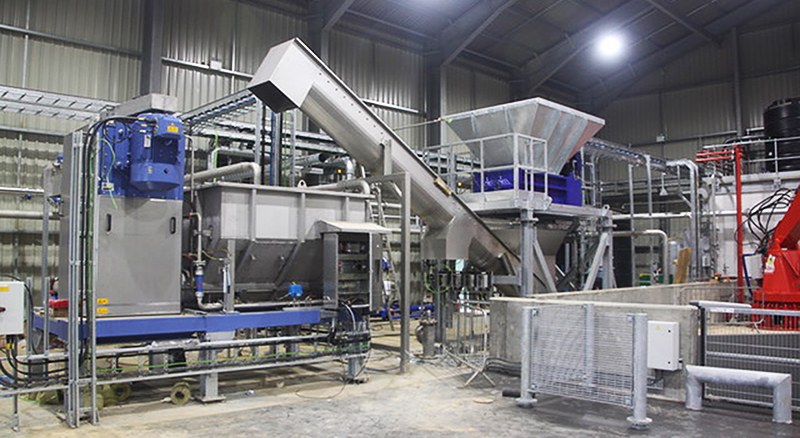
“Food Depackaging: The Systems | BioCycle” from www.biocycle.net and used with no modifications.
Breaking Down the Depackaging Process
Knowing how food waste depackaging works from start to finish can help supermarkets see how easily this technology fits into their current operations. The process starts in the store and goes through several steps, turning what used to be waste into valuable resources that can be put back into the economy in different ways.
Gathering and First Stage Sorting
Depackaging starts in the supermarket itself, where employees pick out and separate food items that are expired, damaged, or can’t be sold. Forward-thinking retailers are putting standard collection methods into place that make the depackaging process later on much easier. These usually involve bins of different colors or specific collection areas that keep organic items with a lot of moisture (like produce and prepared foods) separate from packaged products. This first stage of sorting makes the processing stage later on much more efficient and lowers the rates of contamination in the final organic material that’s recovered.
Several supermarkets have successfully implemented a straightforward two-stream system: one for “naked” organics that can be composted directly without depackaging, and another for all packaged food waste that needs depackaging treatment. This method reduces the need for staff training while increasing diversion rates. The most successful programs integrate these collection systems directly into regular stocking and rotation workflows, making waste segregation a natural extension of existing activities rather than an extra task.
How Machines Separate Food from Packaging
After food waste is gathered, it’s put into the depackaging system where the separation of food and packaging takes place. Today’s machines use a mix of mechanical forces, like shearing, crushing, and agitation, to break the packaging and let the organic contents out. The exact mechanisms differ depending on the manufacturer, but most systems use a processing chamber where a controlled force is used to break the packaging without excessively pulverizing the contents. After that, there are screening stages that separate materials based on how big the particles are and how dense they are. For more information on the depackaging machines used for food and organic waste separation, you can explore further resources.
The most sophisticated systems include several processing steps that are fine-tuned for various types of packaging, ranging from lightweight plastic films to rigid glass containers. The rotation speed, paddle configuration, and screen sizes can be modified based on the composition of the incoming waste stream, providing operators with the flexibility they need to optimize performance as the waste composition changes. This ensures that the quality of the separation remains consistent, regardless of any changes in the input.
What Happens to the Recovered Organic Material
After being separated, the organic fraction, now freed from its packaging, turns into a valuable resource with multiple potential destinations. For supermarkets with access to anaerobic digestion facilities, this clean organic stream feeds biogas production systems that generate renewable energy and nutrient-rich digestate. One ton of recovered food waste usually produces 80-140 cubic meters of biogas, equivalent to about 50-90 gallons of gasoline in energy content.
On the other hand, the organic matter can be sent to composting facilities where it becomes high-quality soil amendments used in farming, landscaping, and land reclamation projects. Some progressive supermarket chains have set up closed-loop systems where their recovered food waste comes back to them as compost used in store landscaping or packaged and sold in their garden departments. This visible display of circular economy principles strongly appeals to environmentally aware consumers while creating an engaging sustainability story.
What Happens to the Packaging?
After the depackaging process, the non-organic materials—mainly plastics, paper, metal, and glass—are sent on their own recovery journey. The system configuration and local recycling infrastructure determine whether these materials undergo further sorting to recover recyclable components. Not all packaging recovered through depackaging processes can be recycled at present, but just separating these materials stops them from contaminating organic streams. This alone is a huge environmental improvement over mixed disposal.
Top-tier retailers are collaborating with packaging suppliers to enhance the recyclability of food packaging, thereby creating a synergy between their depackaging operations and wider waste reduction objectives. The data acquired from depackaging operations also provides valuable information about the types of packaging that most often contain wasted food, enabling targeted upstream waste prevention initiatives that tackle root causes rather than simply addressing symptoms. For more information on the benefits of depackaging, explore this comparison of depackaging vs traditional methods.
Effective Ways Supermarkets Can Implement Depackaging Technology
Supermarkets that are considering the use of depackaging technology should know that successful implementation requires a well-structured approach that addresses both technical and organizational considerations. The most successful implementations view depackaging not as a stand-alone waste management solution but as part of a broader sustainability strategy. By following these proven implementation steps, supermarkets can maximize both the environmental benefits and financial returns.
Assessing Your Existing Waste Profile
Before choosing a specific technology, successful implementers start with a comprehensive waste audit that measures and defines their existing food waste streams. This evaluation should monitor waste production trends over several weeks to allow for seasonal changes and pinpoint main waste categories. Special focus should be given to the proportion of packaged versus unpackaged food waste, as this significantly affects technology needs.
The audit should also map current disposal costs in detail, establishing the financial baseline against which depackaging investments will be measured. Viably’s waste audit protocols help supermarkets capture this critical data with minimal disruption to store operations, providing decision-makers with comprehensive waste profiles that guide technology selection and implementation planning.
Finding the Best Technology for Your Size
Depackaging systems can be as small as a compact unit processing 500 pounds per hour or as large as an industrial-scale installation handling 20+ tons per hour. It is crucial to choose a technology that is the right size to optimize both capital costs and operational efficiency. For individual supermarkets or small regional chains, it is often most cost-effective to install compact systems at each location to eliminate transportation costs and minimize handling. On the other hand, larger chains often find that it is more cost-effective to have centralized processing facilities that serve multiple stores, even if it means dealing with additional logistics.
When choosing a technology, the specific types of packaging in the waste stream should be taken into account, not just size. Some systems are great at processing rigid containers, but have trouble with flexible packaging, while others are more balanced across packaging types. The most successful implementations are those that test the technology with actual waste samples to verify performance before committing to specific equipment.
Identifying Local Partners for Processed Organics
Identifying reliable outlets for recovered organic material is a crucial success factor that should be addressed early in the planning process. Forward-thinking supermarkets start by identifying local composting facilities, anaerobic digesters, and other potential receivers of organic materials. These conversations should establish acceptance criteria, contamination limits, and potential tipping fees or revenue sharing arrangements before finalizing technology selections.
It has been discovered by numerous supermarkets that involving potential end users from the beginning of the planning process fosters valuable relationships that improve the overall success of the program. Some have even entered into long-term contracts where the supermarket agrees to provide consistent quantities of depackaged organics in exchange for preferential tipping fees or revenue sharing arrangements. These partnerships provide stability for all parties involved and maximize the value obtained from resources that were previously wasted.
Maximizing Efficiency with Staff Training
Even with the implementation of automated depackaging systems, the human element is still crucial. Thorough staff training guarantees that waste segregation methods are in sync with the capabilities of the technology, maximizing diversion rates and processing efficiency. The best training programs include visual guidance, hands-on experience, and regular performance feedback to reinforce correct procedures.
The top performers in the industry incorporate waste diversion metrics into their departmental performance indicators. This creates a sense of responsibility and visibility that encourages ongoing improvement. Some have even introduced recognition programs that reward the departments with the highest diversion rates. This fosters a healthy competition that improves performance across the entire organization. The most successful programs are set apart by this cultural aspect – they treat waste diversion as a fundamental operational priority, rather than just an environmental consideration.
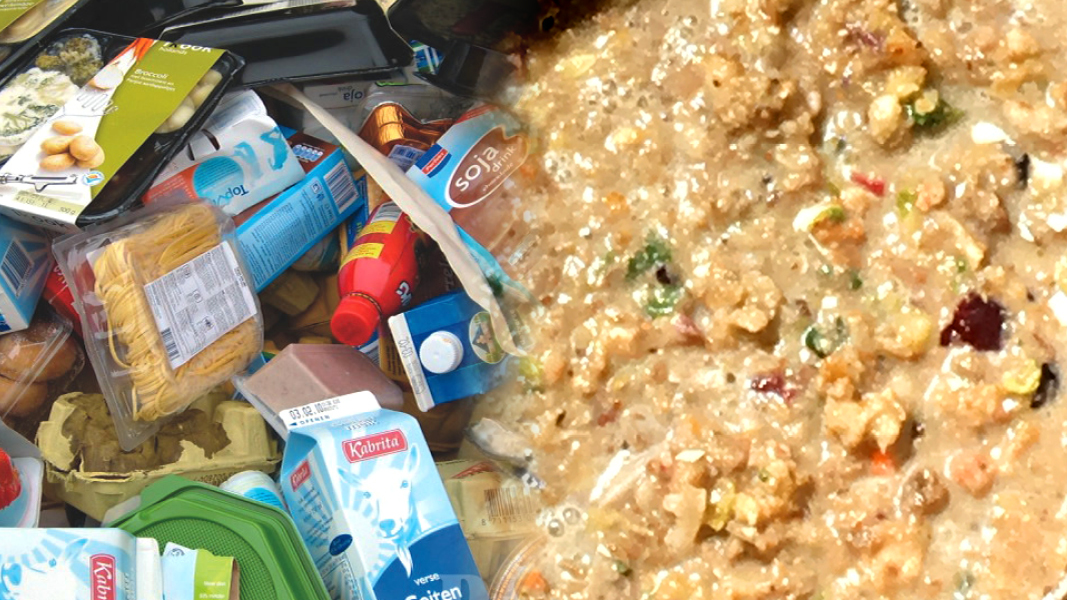
“Food Depackaging: The Systems | BioCycle” from www.biocycle.net and used with no modifications.
Transforming Trash into Treasure: Completing the Circle
Depackaging technology’s transformative power isn’t limited to just reducing waste. It also allows for the extraction of clean organic materials, creating a base for fully circular resource flows that reconnect supermarkets with local agricultural and energy systems. This move from a linear “take-make-dispose” model to a regenerative circular approach is the future of sustainable retail operations.
Transforming Food Waste into Compost and Energy
Food waste that has been depackaged can be utilized in a variety of recovery processes that produce real benefits. When sent to commercial composting facilities, this waste can be turned into nutrient-dense soil enhancements that assist local farming and landscape rehabilitation. The compost that is produced not only captures carbon but also boosts soil health, lowers the need for irrigation, and reduces the reliance on artificial fertilizers. This creates a ripple effect of environmental advantages that go beyond simply diverting waste. Learn more about the benefits of food depackaging in sustainable waste management.
On the other hand, when food waste is processed through anaerobic digestion systems, it produces biogas. This biogas can be used to create electricity, heat, or renewable natural gas. The production of this energy replaces the use of fossil fuels. It also creates a secondary product of digestate that can be used in agriculture in a similar way to compost. Some supermarket chains have directly invested in these processing technologies. This has led to the creation of vertically integrated waste-to-energy systems that power their own operations. This is a strong example of the principles of the circular economy in action.
Opening Up Circular Economy Possibilities
Progressive retailers are using depackaging technology to create a closed-loop system where their waste is transformed into a resource. Some regional chains have partnered with local farms to use their recovered food waste as compost, and then the farms supply the stores with fresh produce. These partnerships create strong sustainability stories that appeal to consumers and bolster local farming. The ability to trace these circular flows and tell customers that the waste from the apples sold in our store helps grow next season’s apples provides marketing opportunities that conventional sustainability initiatives rarely offer.
Reducing Carbon Footprints
Depackaging doesn’t just reduce the amount of waste that goes into landfills, it also has a positive impact on the climate. When food waste breaks down in landfills, it produces methane, a greenhouse gas that’s 25-28 times more potent than carbon dioxide. By sending organic materials to composting or anaerobic digestion facilities instead of landfills, supermarkets can not only prevent these emissions, but also help sequester carbon in the soil. The EPA estimates that every ton of food waste that’s composted instead of landfilled reduces emissions by about 0.4 metric tons of CO₂ equivalent.
As carbon markets develop and more retailers adopt science-based emissions targets, the climate benefits of these practices become more concrete. Many top supermarket chains now include waste diversion metrics in their climate action plans, acknowledging that food waste management is one of their most effective opportunities for reducing emissions. As carbon pricing mechanisms become more widespread, these emissions reductions could provide additional financial returns that further strengthen the business case for investing in depackaging.
What’s Next for Supermarket Waste Management?
Today’s depackaging technology is just the tip of the iceberg for how supermarkets will handle waste in the future. The waste management industry is constantly innovating, due in part to regulatory pressure, the demands of consumers, and corporate sustainability goals. Retailers who are already using these systems are setting up the framework and operational habits that will easily integrate with the new technologies on the horizon.
By comprehending these growth paths, grocery stores can make investment choices that will stand the test of time, even as technologies advance and regulations change. The most effective strategies are those that are adaptable and can keep up with technological progress while also providing immediate waste reduction benefits.
The Future of Depackaging Technology
Depackaging systems in the works are promising major improvements in processing accuracy, energy usage, and adaptability. The systems that are almost ready for use use variable-force processing, which changes mechanical settings based on the type of waste that is being processed. This new method improves the quality of separation and the efficiency of energy use, while also reducing the need for maintenance and making the equipment last longer.
Another exciting development is the use of material recognition technologies. These are being combined with depackaging systems to identify specific types of packaging and direct them through the most efficient processing routes. The hope is that these technologies will be able to recover almost 99.5% of materials with less than 0.1% contamination. This would make the recovered organics suitable for even the most stringent uses.
Depackaging Technologies on the Rise
• Packaging-specific processing pathways are now possible with optical sorting integration
• Variable-force mechanical systems are being developed to automatically adjust to waste composition
• Physical damage to organic materials is being minimized with ultrasonic separation technologies
• Performance is being optimized in real-time with continuous monitoring systems
• Individual stores can now deploy mobile systems on rotating schedules
Furthermore, the rise of modular, scalable system architectures is allowing retailers to start small and expand as their programs mature. This phased implementation approach aligns capital expenditures with operational benefits that have been demonstrated, reducing financial risk and speeding up adoption.
What’s more, equipment manufacturers are creating mobile depackaging units that can be used across several locations, serving single stores on a rotating schedule. This shared infrastructure model greatly reduces the need for capital while still reaping most of the benefits of waste diversion. This makes the technology available to smaller retailers and those with limited capacity to invest.
Integrating AI and Automation
Waste management technologies are being revolutionized by artificial intelligence and machine learning, with depackaging systems reaping significant benefits from these capabilities. Advanced sensors are incorporated into next-generation systems, collecting real-time data on waste composition, processing efficiency, and output quality. This data is analyzed by machine learning algorithms to optimize processing parameters, predict maintenance needs, and continuously improve the effectiveness of separation.
These systems also offer an unparalleled insight into the trends of waste generation, allowing retailers to pinpoint specific products or departments that are contributing more than their fair share to waste streams. This valuable information can be used to support targeted waste reduction initiatives that address the root causes rather than just the symptoms, creating solutions at the start of the process that work in harmony with recovery efforts at the end of the process.
Adoption Boosting Policy Changes
The Upcoming Regulatory Environment
• Organic waste disposal bans are growing across North America and Europe
• Extended Producer Responsibility legislation is increasing the requirements for packaging recovery
• Carbon pricing mechanisms are monetizing emissions reductions from waste diversion
• Landfill taxes are increasing disposal costs for unprocessed organic waste
• Municipal zero waste targets are encouraging local infrastructure developmentFood waste regulations are changing quickly, which will speed up the use of depackaging technology. In addition to the current mix of state and local bans on organic waste, it seems more and more likely that federal laws will be established in the next legislative cycle to set national targets for diverting food waste. Several proposed laws would require a 50% diversion by 2030, which would match international commitments and create strong incentives to implement the technology.
Extended Producer Responsibility (EPR) programs for packaging are growing, and they are placing the financial burden of packaging recovery onto producers. These policies provide more incentives for depackaging by setting recovery goals and funding mechanisms that support the development of infrastructure.
Another policy frontier with significant implications for food waste management is represented by carbon pricing mechanisms. As these systems mature and carbon prices increase, the emissions reductions achieved through organic waste diversion will have quantifiable financial value that enhances project returns. Several large supermarket chains are already incorporating projected carbon prices into their investment analyses, recognizing that these mechanisms will substantially impact project economics within typical equipment lifespans.
With policy trends coming together, it is clear that comprehensive food waste diversion requirements are on the horizon. Supermarkets that are already using depackaging technology are not only ahead of the game in terms of regulatory compliance, but they are also reaping operational benefits right now.
Common Questions
When looking into depackaging technology, retailers often have questions about how to implement it, what kind of performance they can expect, and what the financial impact might be. These answers are based on the experiences of supermarkets that have already implemented this technology.
What is the typical cost of depackaging technology for supermarkets?
Depending on the scale of the system, processing capacity, and technical specifications, investment costs can vary significantly. Entry-level systems that process 500-1,000 pounds per hour generally require investments of $75,000-150,000, making them suitable for individual stores or small chains. Mid-capacity systems that handle 1-3 tons per hour range from $150,000-300,000 and are appropriate for centralized processing that serves multiple store locations. Industrial-scale systems that process 5+ tons per hour typically require investments of $300,000-750,000 and are usually used by large chains that process waste from dozens of stores at centralized facilities.
While the initial investment may seem high, the operating cost reductions often make up for it. Payback periods usually range from 18-36 months, depending on local disposal costs, waste volumes, and available outlets for recovered materials. Many equipment providers now offer financing options that align payment schedules with projected cost savings, creating cash-flow-positive implementations from day one. Think Viably can help supermarkets navigate these financial considerations and identify the optimal system scale for their specific waste profiles and operational contexts.
Are all types of food packaging compatible with depackaging machines?
Contemporary depackaging machines can manage the bulk of food packaging types found in supermarket waste streams. These include plastic containers, cardboard, metal cans, glass jars, flexible films, and multi-material packaging. However, the efficiency varies across packaging types, with some machines performing better with specific materials while underperforming with others. The most adaptable machines use multiple processing stages optimized for different packaging attributes. This allows them to achieve high recovery rates across diverse waste streams. When considering technology options, retailers should test representative samples of their actual waste. This will help them verify the machine’s efficiency across their specific packaging combination.
How much food waste can be saved using depackaging?
Depackaging systems today can regularly recover 95-99% of organic material, with the best systems reaching the top end of that range. The recovered organic material usually has less than 0.5% contamination from packaging fragments, which is acceptable for most composting and anaerobic digestion facilities. These performance numbers are a big step up from manual separation methods, which usually only recover 60-70% of organic material and require a lot of labor.
Keep in mind that these recovery rates refer specifically to the depackaging process. The total percentage of supermarket food waste that is diverted through comprehensive programs that include depackaging usually ranges from 70-90%, with some of the leading implementers achieving diversion rates at the higher end of this range. The gap between the theoretical and actual diversion rates is primarily due to operational factors rather than technology limitations, which underscores the importance of comprehensive implementation approaches that address collection systems, staff training, and organizational alignment.
How do supermarkets calculate the return on investment (ROI) of using this technology?
When calculating the ROI of depackaging technology, supermarkets take into account more than just the cost savings from reducing waste. The main financial benefits usually include: lower landfill tipping fees (which can be $55-100+ per ton depending on where you are); lower transportation costs due to reducing the volume of waste; possible income from the organic materials that are recovered ($15-50 per ton depending on the local market); savings on labor costs compared to manual depackaging methods; and lower future costs of complying with regulations. Many retailers also consider other benefits that are harder to measure, such as improving their brand’s reputation, increasing customer loyalty, and possibly generating carbon credits.
Do supermarkets have to follow regulations to reduce food waste?
Food waste regulations are changing quickly and depend on the location. Several states including California, Massachusetts, Connecticut, Rhode Island, Vermont, and New York have made commercial organic waste bans that affect large supermarkets. These regulations usually ban food waste from going to a landfill and require it to be composted, anaerobically digested, or used in other beneficial ways. At the city level, cities including San Francisco, Seattle, Portland, and Minneapolis have made similar requirements that affect retailers in their cities.
Aside from these outright prohibitions, numerous areas have set waste diversion objectives that indirectly necessitate food waste recovery. For instance, California’s SB 1383 calls for a 75% decrease in organic waste disposal by 2025, putting significant regulatory pressure on the development of comprehensive diversion programs. The tendency for stricter regulation is gaining momentum, with more states and municipalities actively working on comparable requirements. Retailers who are ahead of the curve are putting solutions in place before these mandates are implemented, allowing them to gain implementation experience and optimization opportunities before compliance deadlines result in resource shortages in the waste management sector.
Depackaging technology is being adopted by supermarkets big and small as a scalable, efficient solution for managing food waste. By extracting organic materials from their packaging, these systems create environmental benefits, operational savings, and new revenue opportunities. This is transforming waste management from a cost center into a sustainability asset.
