
Cleaning Up Pulper Rope Ragger Wire Rejects: How Drycake Twister Transforms Reject Separation
It is a tangled rope-like strand of non-paper contaminants that get trapped inside a paper mill’s hydraulic pulper. Typically made of roughly 45% to 50% steel wire/metal combined with post-consumer plastics, synthetic fibres, packaging films, and bits of string and wood.
Key Takeaways
- Pulper wire (also known as ragger wire, pulper rope, or ragger tail) and coarse rejects are becoming harder to manage as recycled furnish gets dirtier and more variable.
- Traditional wet handling and manual cleanup lead to high disposal costs, safety risks, and frequent maintenance headaches.
- The Drycake Twister is a dry mechanical separation system that cleans up pulper wire and coarse rejects by liberating and separating different fractions.
- Mills can improve dryness, cut landfill tonnage, recover fibre, and simplify handling by integrating the Twister into the reject line.
- Dry separation technologies like the Twister support future sustainability and corporate responsibility goals (ESG), circularity, and cost-reduction goals in the paper industry.
Introduction: Why Pulper Wire and Reject Cleanup Matters More Than Ever
Recycled paper pulping has always come with a cost: contaminants. As mills push higher recycled content, they face a growing stream of plastics, metals, textiles, composites, and general trash mixed into their recovered paper.
Some of the dirtiest material in the plant ends up in the pulper rejects and the so‑called “wire” or pulper rope. This twisted mass of plastics, wire, textiles, and other debris is heavy, wet, difficult to cut, and expensive to dispose of.
For many mills, reject cleanup is still treated as a necessary nuisance. But with increasing landfill costs, stricter regulations, and tougher ESG targets, pulper wire and reject handling has become a strategic lever for cost, safety, and sustainability performance.
This article looks at why traditional reject systems are under pressure, and how the Drycake Twister – a dry mechanical separation system – can help mills clean up their wire and coarse rejects more efficiently. If you are responsible for production, maintenance, or waste costs in a paper mill, the way you handle rejects is more important than ever.
The Contaminant Challenge in Recycled Paper Pulping
Recovered paper quality has changed significantly over the last decade. Mills are dealing with more complex packaging, more post-consumer material, and more non-paper content mixed into their furnish.
More contamination in today’s recycled paper
Typical contaminants arriving with recovered paper include:
- Plastics: films, bags, strapping, cups, laminates, shrink wrap
- Metals: staples, clips, wires, cans, straps, and occasionally small tools and hardware
- Textiles and foils: rags, strings, woven bags, foil laminates
- Glass and grit: broken glass, sand, stones, ceramics
- Organics: food residues, labels, adhesives, dirt
The pulper and coarse screening stages are where much of this material is first concentrated. The more variable and contaminated the feed, the more demanding the reject handling system becomes, and as previously recycled material recirculates the small contaminants within it, the problem gets worse.
The special problem of pulper wire
As contaminants are drawn together by the pulper’s mechanical action, they form a twisted “wire” or pulper rope: a dense bundle of plastic films, textiles, metals, and other long, stringy materials intertwined with fibers and organics.
This wire typically has:
- Very high moisture content (and therefore high weight)
- Significant fibre and organics still trapped inside
- Embedded sharp materials such as metal wires and staples
The result is an output that is dangerous to handle, costly to transport, and expensive to landfill. When volumes increase or furnish quality deteriorates, traditional cleanup methods often fail to keep up.
The cost of poor reject handling
If reject and wire cleanup is not effective, mills can experience:
- Higher maintenance costs due to wear, plugging, and damage in pumps, screens, and cleaners
- Unplanned outages triggered by blockages in reject lines or downstream systems
- High disposal and transport costs from wet, heavy rejects and wire
- Safety and ergonomics issues for operators handling heavy, sharp, and dirty materials
- ESG and reputational pressure as waste volumes and landfill reliance become more visible to customers and regulators
Why Conventional Ragging and Rejects Cleanup Struggles
Many mills still rely on a combination of wet conveyors, screw presses, compactors, and manual labour to manage pulper rejects and wire. These systems were often designed for cleaner, more predictable streams than what mills see today.
Traditional wet handling limitations
Conventional setups often include:
- Wet conveyors, or pumps moving reject slurries away from the pulper
- Screw presses or compactors designed to remove water from mixed rejects
- Bins or containers that are swapped out and hauled to landfill or waste incineration facilities
However, with higher paper recycling rates comes more plastics, textiles, and composites, these systems often struggle to dewater effectively. Instead of a compact, relatively dry reject, mills end up with a heavy, wet mix that drives up disposal costs, and makes recycling impracticable.
Manual intervention and low-tech workarounds
To keep systems running, many mills still depend on manual work, including:
- Operators manually cutting and handling pulper wire
- Frequent cleaning around chutes, bins, and compactors
- Ad-hoc sorting or cutting to fit rejects into containers
This exposes staff to sharp, contaminated materials and increases the risk of injuries. It also uses up labour on non-value-adding tasks instead of maintenance and optimization work.
When “good enough” becomes a constraint
As long as paper recyclate quality was relatively stable, traditional reject handling could be considered “good enough.” But with rising contamination and more stringent waste and sustainability and corporate responsibility goals, the pain points become harder to ignore:
- Moisture content that is too high for economical disposal
- Limited recovery of valuable fractions such as metals or fibres
- Reject systems that become bottlenecks during high-load conditions
What Modern Mills Really Need from Reject Cleanup
Today, reject management is viewed not just as a cost centre, but as a process that can materially affect plant performance. Modern mills typically look for four things from a reject cleanup solution.
1. Lower disposal costs per ton of product
Reducing the moisture and mass of rejects, including pulper wire, has a direct and measurable impact on transport and landfill fees. Every percentage point of extra dryness can translate into significant savings over a year.
2. Stable uptime and predictable operation
Reject handling equipment must cope with variability in volume and composition without causing frequent stoppages or maintenance issues. Reliability and ease of operation are key.
3. Less manual handling and improved safety
Automation and better mechanical separation should reduce the need for manual cutting, lifting, and sorting of dangerous material. The goal is to keep operators out of the line of fire as much as possible.
4. Tangible ESG and sustainability gains
Mills are under pressure to show continuous improvement in waste management, circularity, and emissions. Better separation can:
- Reduce landfill tonnage
- Increase recovery of recyclables and organics
- Lower transport costs by the weight reduction provided by drying
- Lower transport-related emissions
Introducing the Drycake Twister
Drycake is a specialist in separation and waste handling technologies. The Drycake Twister is an organics and waste separation system based on dry mechanical principles. While it is used in several industries, it is particularly well suited to tackle the complexity of pulper rejects and wire in recycled paper mills.
What the Drycake Twister does
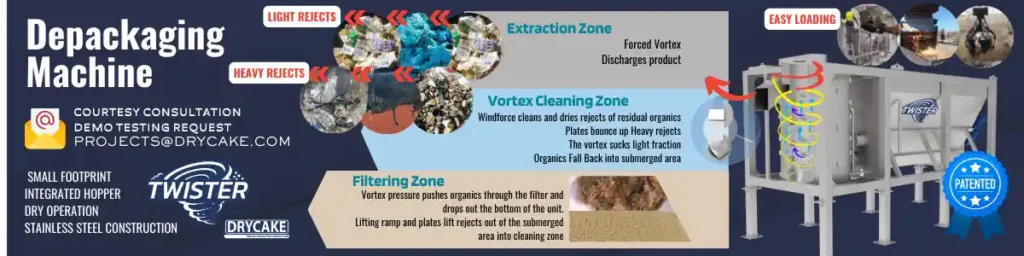
The Twister is designed to receive a mixed, often wet stream of rejects – including pulper wire – and mechanically separate it into distinct fractions. It uses motion, impact, and friction to break up the mass, liberate trapped materials, and separate them based on their physical behaviour.
Applied to a paper mill context, the Twister can:
- Clean pulper wire by removing entrained fibres and organics
- Separate lighter organics and fibrous fractions from heavier inerts and metals
- Produce drier, more homogeneous streams that are easier to handle and dispose of, or to valorise
Where the Twister fits in the pulper reject line
In a typical recycled paper mill, the Drycake Twister would be installed:
- Downstream of the pulper, junk trap, or detrashing system
- As part of the coarse reject and wire handling line
- Either in combination with existing compactors/presses or replacing some elements, depending on the layout
The exact configuration depends on each mill’s layout, but the principle remains the same: move the dirtiest, most problematic material into a controlled environment where it can be efficiently separated and conditioned.
How the Drycake™ Twister Cleans Up Pulper Wire and Rejects
The Twister’s value comes from applying controlled mechanical energy to reject streams. While specific internals and settings are tailored to each installation, the process can be described in several steps.
1. Infeed and material acceptance
Mixed rejects and pulper wire are conveyed to the Twister via hoppers, chutes, or conveyors. The system is designed to accept the normal range of moisture and consistency found in pulper rejects, subject to project-specific limitations.
Key considerations at this stage include:
- Providing a consistent feed to avoid surges
- Ensuring operator safety with appropriate guarding and interlocks
- Coordinating feed with upstream pulper or reject equipment
2. Mechanical liberation inside the Twister
Once inside, the Twister subjects the feed material to intensive motion, twisting, and tumbling. This mechanical action:
- Is unique in its use of air where all other systems use water
- Loosens and opens up the dense pulper wire bundle
- Separates lighter organics and fibres from heavier contaminants
- Exposes trapped water and fines, aiding dewatering and classification
- Effectively clean and dries the material
Different materials behave differently under this motion. Flexible, fibrous materials tend to behave one way; dense metals and inerts behave another; films and foils behave differently again. The Twister exploits these differences to achieve separation.
3. Fractionation and discharge
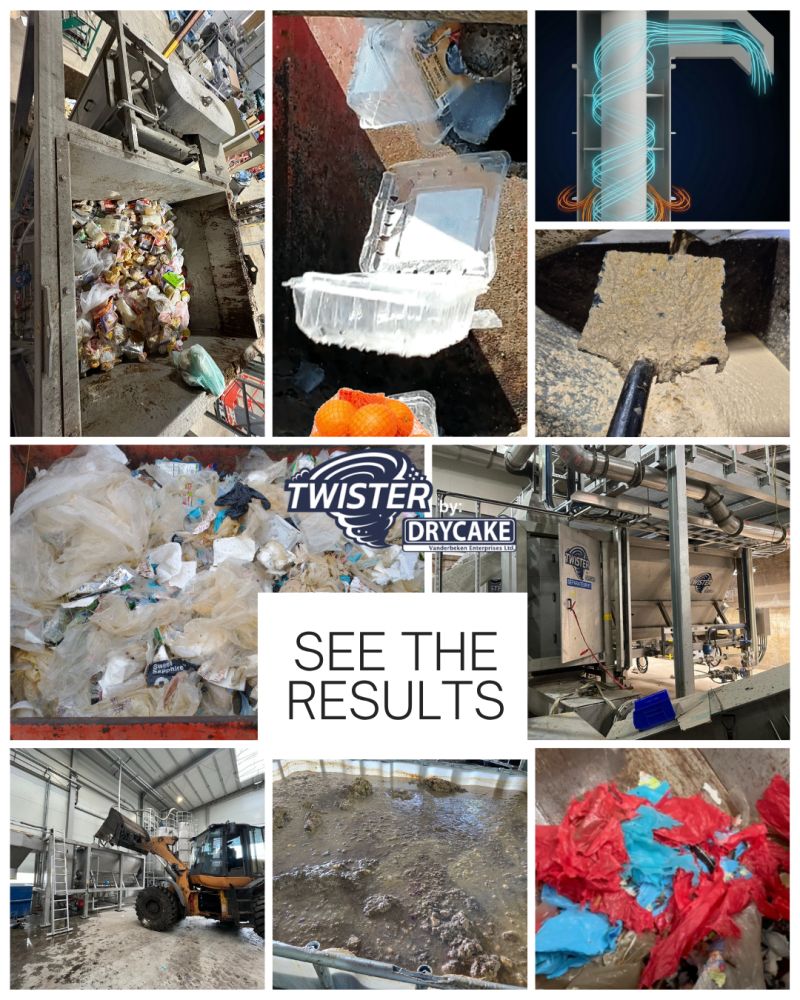
As the material is processed, distinct fractions are discharged through different outlets or paths. In a pulper reject application, you may see, for example:
- A cleaned wire fraction, with less organics and fibres attached, and improved dryness
- A lighter organics and fibre fraction, suitable for further treatment, energy recovery, or disposal under different conditions
- A heavies/inerts fraction with stones, metals, and other dense pollutants
Depending on the installation, these fractions can be directed to:
- Metal recovery (e.g. magnetics)
- Alternative disposal routes (e.g. energy recovery instead of landfill)
- Existing compaction or fibre dewatering equipment for final conditioning
4. Operation and control
The Twister is integrated into the mill’s control system (PLC/DCS) and can be monitored like other key process assets. Operators typically have access to parameters such as:
- Machine speed or intensity of motion
- Residence time and feed rate
- Load and vibration indicators
With appropriate tuning and basic preventive maintenance, the Twister is designed to operate reliably under the variable conditions typical of recycled paper mills.
Technical and Economic Benefits for Mills
When applied to pulper wire and coarse rejects, the Drycake Twister can deliver a combination of technical and financial benefits.
Improved dryness and reduced disposal tonnage
By mechanically opening up the wire and rejects and separating fractions, the Twister can improve the effective dryness of material going to disposal. While actual figures are site-specific, even modest increases in dryness can significantly reduce:
- Total tonnage shipped off site
- Landfill and gate fees billed by weight
- Transport costs, especially where distances are long
Mills can use their current reject weights, moisture estimates, and disposal tariffs to build a simple before/after cost model and evaluate potential savings.
Cleaner, more manageable wire
When the pulper wire exits the Twister, it typically has:
- Less attached fibre and organics
- Lower moisture content
- More consistent composition
This makes it easier and safer to cut, handle, and store. In some cases, the cleaned wire may also be more attractive as scrap material compared to a heavily contaminated rope.
Fibre and organics recovery
Fibres trapped inside the wire and coarse rejects represent lost yield. By liberating these materials and directing them into separate fractions, the Twister can help mills:
- Recover additional fibre that would otherwise leave with the wire
- Create organics-rich streams that may be suitable for energy recovery or other uses, depending on local options
Over a year, even a small improvement in overall fibre yield can translate into substantial value.
Protection of downstream equipment
Better separation of rejects and more effective cleanup of problematic materials reduces the burden on downstream systems. Mills can see:
- Fewer blockages and trips caused by bulky or stringy material
- Less wear on pumps, screens, and cleaners
- Reduced time spent on emergency interventions in the reject line
Safety, ergonomics, and housekeeping
By automating more of the reject cleanup process and reducing the need for manual cutting and handling of wire, the Twister can contribute to:
- Lower exposure to sharp, heavy, and contaminated materials
- Cleaner floors and working areas around reject equipment
- Improved overall perception of safety and cleanliness in the plant
Environmental and ESG performance
From a sustainability viewpoint, the Twister supports:
- Landfill reduction through lower tonnage and better separation of fractions
- More efficient logistics with fewer truckloads required
- Improved circularity by enabling recovery of recyclables and organics that were previously discarded in mixed waste
These outcomes can be incorporated into ESG reporting, sustainability communications, and customer-facing documentation.
Implementation Considerations for Paper Mills
Every mill is different, but there are common considerations when evaluating a Drycake Twister installation.
Site assessment and data collection
Before design and sizing, the following information is typically gathered:
- Average and peak reject flow rates
- Typical composition and variability of pulper rejects and wire
- Moisture levels and current disposal routes
- Available space, access, and structural limitations in the reject area
Retrofit versus greenfield installation
In a retrofit scenario, the Twister is integrated into existing lines, often:
- Receiving rejects from current detrashers, junk traps, or conveyors
- Feeding existing compactors or containers, with improved upstream separation
In a greenfield or major upgrade, the Twister can be part of a fully redesigned reject handling concept, with optimized flows and automation from the outset.
Commissioning and optimization
Commissioning generally involves:
- Mechanical and electrical installation and checks
- Initial dry and wet runs
- Progressive ramp-up of load while monitoring performance
- Adjustment of operating parameters to match local material characteristics
Over the first weeks of operation, operators and engineers fine-tune settings to balance separation performance, energy use, and mechanical stress.
Maintenance and reliability
The Twister is a mechanical system and requires regular inspections and preventive maintenance. Typical tasks include:
- Checking wear surfaces and replacing wear parts as needed
- Inspecting bearings, seals, and drives
- Verifying fasteners and structural elements
With appropriate maintenance, the system is designed for reliable operation in the demanding environment of a recycled paper mill.
Application Scenarios Where Twister Adds the Most Value
While each mill has unique challenges, certain situations tend to show the strongest benefits from a Drycake Twister™ installation.
Packaging mills with rising plastic contamination
Board and packaging mills processing a lot of post-consumer containers and corrugated often see:
- More plastic films, straps, and laminates
- Heavier, dirtier pulper wires
The Twister helps reduce plastic carryover, clean up the wire, and cut disposal tonnage.
Deinking and tissue mills focused on yield
Mills processing office waste and mixed graphic grades can benefit from additional fibre recovery out of coarse rejects. By opening and separating the mass in the Twister, fibre losses with the wire and reject stream can be reduced.
Board mills with aggressive landfill reduction targets
Where corporate or regulatory goals demand significant reductions in landfill, better classification of rejects becomes essential. The Twister can provide the separation needed to divert certain fractions away from landfill and into alternative outlets, subject to local options.
Dry Separation and the Future of Recycled Paper
As recycled content targets tighten and packaging continues to evolve, the contaminant burden on mills will not decrease. At the same time, water and effluent constraints are becoming more pronounced, and waste handling is under closer scrutiny.
Dry mechanical separation technologies like the Drycake Twister offer a way to handle tough reject streams without relying on more water. By focusing energy where it is most needed – on the dense, dirty rejects – mills can make meaningful gains in cost, uptime, safety, and sustainability.
Key Takeaways Recap
- Pulper wire and coarse rejects are becoming more complex, heavier, and more expensive to handle.
- Conventional wet handling and manual methods struggle with modern contamination levels.
- The Drycake Twister uses dry mechanical separation to clean and condition pulper wire and rejects.
- Mills can reduce disposal tonnage, recover more fibre, protect equipment, and improve safety and ESG performance.
- Dry separation is a strategic tool for mills facing higher recycled content, stricter regulations, and rising waste costs.
Call to Action: Learn More and Watch Drycake Twister in Action
If you want to see what the Drycake Twister can do with real reject streams, the next step is simple.
Visit the official Drycake Twister website to read more and watch videos of the system in operation:
There you can explore application examples, see the Twister handling difficult materials, and decide whether a more detailed evaluation makes sense for your mill.
FAQs
What types of pulper rejects can the Drycake Twister handle?
The Twister is designed to handle mixed coarse rejects and pulper wire that typically include plastics, textiles, organics, metals, and inerts. Exact capabilities and recommended operating ranges are defined on a project basis, depending on your incoming material and layout. A site assessment is usually the first step to confirm suitability.
How does the Twister compare to adding another screw press or compactor?
A screw press or compactor focuses primarily on dewatering. The Twister focuses on separation – mechanically opening the mass and dividing it into more homogeneous fractions. In some projects, the Twister may complement existing dewatering equipment; in others, it may allow a different reject handling concept altogether.
What kind of throughput makes a Twister installation viable?
Throughput requirements depend on local economics. Higher reject volumes, higher disposal costs, and higher labor/safety risks around wire handling generally support a stronger business case. As a starting point, mills should quantify their current reject tonnage, moisture, and disposal costs to see whether the potential savings justify further investigation.
How sensitive is Twister performance to changes in furnish quality?
The Twister is designed to operate under variable conditions typical of recycled paper mills. While dramatic changes in furnish or contamination level may require adjustments to operating parameters, the system is engineered to accommodate normal fluctuations without constant operator intervention.
Can the Twister help us meet ESG and landfill reduction targets?
Yes. By reducing moisture and mass going to landfill, improving separation of recyclables and organics, and enabling more efficient logistics, the Twister can support documented improvements in waste and emissions metrics. Many mills include such improvements in their ESG and sustainability reporting.
