
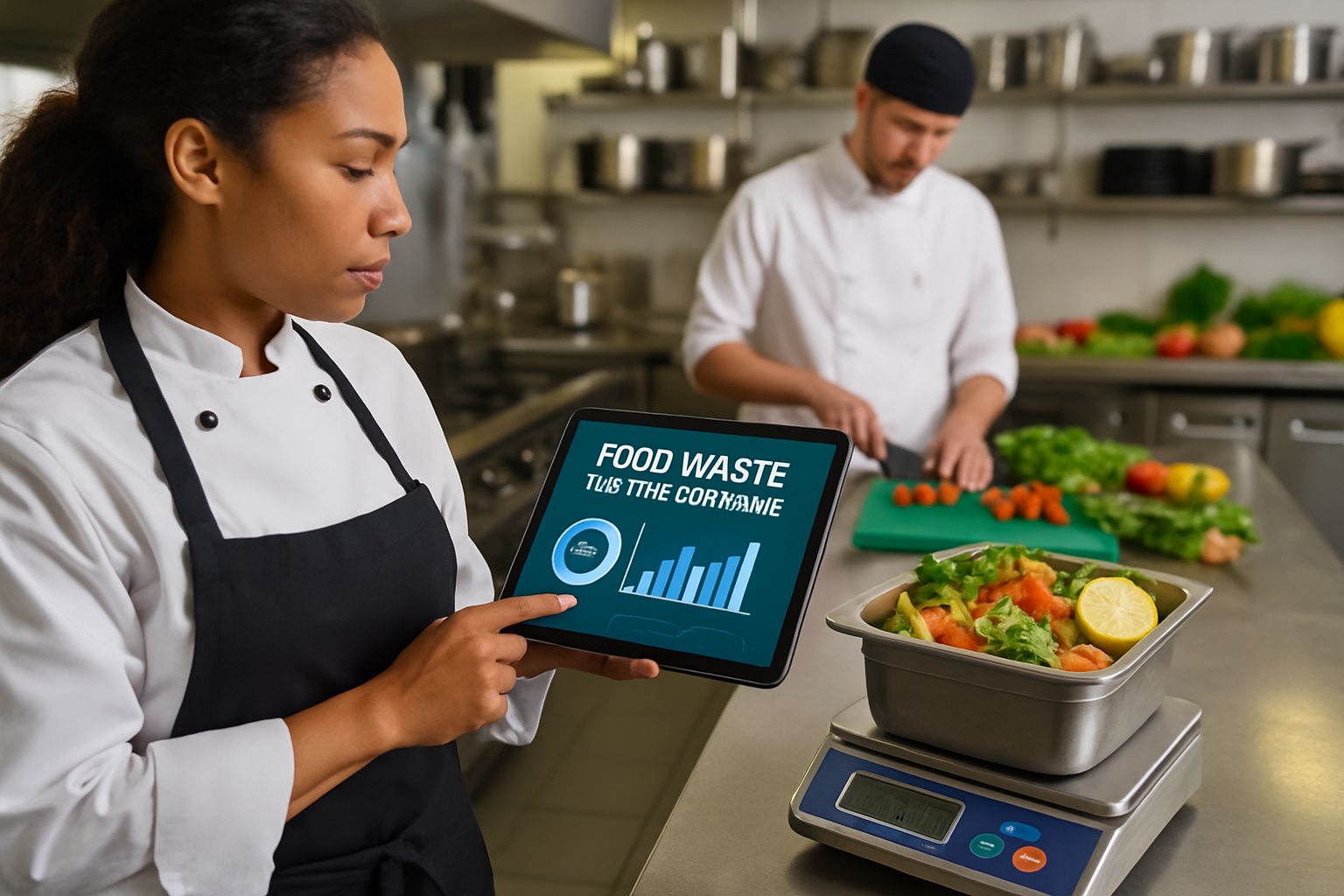
- Winnow’s AI bin-tracking is touchless — staff do nothing manually, making adoption fast in high-turnover kitchens.
- Leanpath tracks waste before it hits the bin, giving chefs a more granular view of prep waste and overproduction causes.
- Both platforms have delivered measurable cost savings — Winnow reports a 2–8% reduction in food costs within 90 days across its customer base.
- Choosing the wrong platform for your kitchen type can limit your ROI — the capture method matters more than most buyers realize.
- There’s a hidden factor in multi-site reporting that separates these two tools significantly — more on that below.
If you run a commercial kitchen and food waste is eating into your margins, two platforms consistently rise to the top of the conversation: Winnow and Leanpath.
Both tools are purpose-built for professional kitchens. Both use data to help operators cut costs and reduce waste. But they approach the problem from fundamentally different angles — and that difference determines which one belongs in your kitchen. Resources like Winnow Solutions have helped hundreds of kitchens globally connect kitchen operations to measurable waste reduction, and understanding how they compare is the first step to choosing the right fit.
Key Takeaways: Winnow vs. Leanpath at a Glance
Before diving deep, here’s what you need to know upfront: Winnow uses AI-powered bin tracking that requires zero staff input, while Leanpath positions tracking above the bin to capture waste earlier in the workflow. Winnow is built around frictionless adoption; Leanpath is built around detailed data coaching. Your kitchen’s size, staffing model, and waste profile will determine which tool delivers better results for you.
Two Platforms, One Goal: Cutting Kitchen Food Waste
Food waste in commercial kitchens is a profitability problem before it’s an environmental one. Every kilogram of food thrown away represents purchasing cost, labor, energy, and storage that generated zero revenue. The hospitality industry loses a significant portion of its food budget to waste that could have been prevented with better visibility.
Winnow and Leanpath both answer the same core question: what food are we wasting, how much, and why? Where they differ is in how they collect that answer, and what they do with it once they have it. For a detailed comparison, you can compare Leanpath vs. Winnow to see which suits your needs best.
Why Food Waste Tracking Software Actually Works
The logic behind food waste software is straightforward. Kitchens that can see their waste patterns in real time make different decisions than kitchens operating on gut instinct. When a chef knows that 4kg of prepped carrots is being discarded every Tuesday, they can adjust production schedules, portion sizes, and ordering quantities before the waste happens again next week.
Without tracking software, that information lives in nobody’s head. Waste happens invisibly, and so do the costs attached to it. Tracking software makes the invisible visible — and that visibility is where the savings come from.
The Five Criteria That Matter Most When Comparing These Tools
To give you a fair and useful comparison, this article evaluates Winnow and Leanpath across five specific criteria that matter most for commercial kitchen operators:
- Capture method — where in the workflow waste is recorded and how
- Ingredient recognition accuracy — how precisely the system identifies what’s being wasted
- Manual input requirements — how much staff interaction the system demands
- Photo and audit trail quality — the evidence available for review and analysis
- Reporting depth — how actionable the data output actually is for kitchen managers

“What is a Food Waste Tracking System?” from www.linkedin.com and used with no modifications.
How Winnow Tracks Food Waste in Commercial Kitchens
Winnow records waste at the point of disposal. The system is positioned at the bin, and when food is thrown away, Winnow’s camera and scale capture the weight and identify what’s being discarded — automatically, without any staff action required. This touchless approach is central to Winnow’s value proposition, particularly in kitchens where staff engagement with technology tends to be inconsistent.
Winnow’s AI-Powered, Touchless Bin Tracking Method
Winnow Vision, Winnow’s flagship AI product, uses a camera mounted above the bin combined with a connected scale. When a chef discards food, the system photographs the waste, weighs it, and the AI identifies the item type from a library of hundreds of food categories. No scanning. No tapping a screen. No staff involvement whatsoever. For a detailed comparison, you can explore the differences between Leanpath and Winnow Vision.
This matters in real kitchen environments. High-turnover teams, busy service periods, and language barriers all create friction that causes manual logging systems to break down. Winnow sidesteps that friction entirely by removing the human step from data collection.
What Winnow Vision Captures (and What It Misses)
Winnow Vision performs well when food items are disposed of individually or in clearly identifiable batches. Where it faces limitations is with mixed waste — when multiple ingredients are discarded together, the AI has a harder time distinguishing what’s what. Additionally, because capture happens at the bin, waste that occurs earlier in the prep process (mis-cuts, trim excess, overproduction that’s repurposed before disposal) may not be captured at all.
Feature | Winnow Vision | Standard Winnow |
|---|---|---|
Capture method | AI camera + scale (touchless) | Scale + manual item selection |
Staff input required | None | Minimal (item confirmation) |
Food recognition | AI-automated, hundreds of items | Manual selection from list |
Photo evidence | Yes, per disposal | No |
Best for | High-volume, low-staff-engagement kitchens | Kitchens beginning waste tracking |
One key nuance: Winnow captures waste after the decision to discard has already been made. This means it’s excellent for identifying patterns and building the business case for change, but it doesn’t interrupt the waste event itself. That distinction becomes important when comparing it to Leanpath’s approach.
Winnow Hub: Multi-Site Reporting and Group Dashboards
For operators running multiple locations, Winnow Hub is the centralized reporting layer that aggregates waste data across sites. Kitchen managers and group-level operators can view trends by location, compare performance across sites, and benchmark waste reduction progress over time.
The cross-site visibility Winnow Hub provides is one of its strongest features for hospitality groups, hotel chains, and contract catering operators where portfolio-level waste reporting is increasingly tied to sustainability commitments and procurement decisions.
Dashboard views are designed to be accessible to non-technical users, with clear trend lines, cost breakdowns by food category, and flag alerts when waste spikes above normal thresholds at individual sites. For more information on food waste management, explore food waste separation solutions.
The 2–8% Food Cost Reduction Winnow Customers Report
Winnow publicly reports that its customers see a 2–8% reduction in food costs within 90 days of deployment. To contextualize what that means operationally, you can compare Leanpath vs. Winnow Vision to understand how these systems impact food cost savings.
- A kitchen with a monthly food cost of £50,000 could save between £1,000 and £4,000 per month
- The reduction comes primarily from adjusted ordering, improved prep portion control, and reduced overproduction
- Results are typically visible within the first 30–60 days as teams begin responding to the data
- Over 1,000 kitchens globally currently use Winnow’s non-AI standard product alongside the Vision tier
These figures represent customer-reported outcomes, not guaranteed benchmarks. Actual results vary by kitchen type, baseline waste levels, and how actively management engages with the data. Kitchens that use the data to drive weekly behavioral change consistently outperform those that install the system and check reports monthly.
How Leanpath Tracks Food Waste in Commercial Kitchens
Leanpath takes a different position in the kitchen workflow. Rather than capturing waste at the bin, Leanpath tracks food before it’s discarded — typically at the prep station or at the point where overproduction is identified. Founded in 2004 in the United States, Leanpath has built its methodology around prevention-focused tracking rather than post-disposal analysis.
Above-the-Bin Tracking: Why It Changes What Gets Measured
Leanpath’s above-the-bin approach means waste is logged at the moment a chef decides food won’t be used — not after it’s already been thrown away. This captures a category of waste that Winnow’s bin-level system can miss entirely: prep waste, trim waste, and overproduction that gets identified before disposal. When a chef over-prepares a sauce or trims vegetables beyond spec, Leanpath records that event in the workflow, not at the end of it.
Leanpath’s Product Range: From Manual Scales to Full AI
Leanpath offers a tiered product range designed to meet kitchens at different levels of technological readiness. At the entry level, the Leanpath 40 provides a connected scale with a simple touchscreen interface where staff manually log what they’re wasting and why. It’s a low-barrier starting point for kitchens that are tracking food waste for the first time and need straightforward, reliable data without a steep learning curve.
Moving up the range, the Leanpath 360 Bench Scale adds food waste photography to the tracking process. Staff place waste on the scale, the system photographs it, and that image becomes part of the permanent audit trail for that disposal event. The photo layer adds a level of accountability and root-cause identification that pure weight data alone can’t provide — kitchen managers can review images to spot patterns in how food is being prepped, stored, or handled before waste occurs. For more on how food waste is managed, explore supermarkets’ food waste management strategies.
At the top of the Leanpath range sits their AI-powered touchless tracking tier, which automates food recognition in a similar fashion to Winnow Vision. However, because Leanpath’s capture point is earlier in the workflow, the AI is identifying food items before they’ve been mixed, broken down, or combined with other waste — which can improve recognition accuracy compared to bin-level capture.
How Leanpath Tracks Food Destined for Donation
One area where Leanpath has a distinct operational advantage is in tracking food that doesn’t go to the bin at all. Many commercial kitchens — particularly those in healthcare, education, and corporate catering — redirect surplus food to donation programs, composting streams, or staff meals. Leanpath’s pre-disposal tracking captures this food movement, giving operators a complete picture of all food that exits the production cycle, not just what ends up as waste.
- Surplus food logged for donation is recorded with weight, category, and time of diversion
- Composting and staff meal redirections can be tracked as separate waste streams
- Donation data can feed directly into sustainability reporting and ESG documentation
- Operators can set diversion targets and track progress against them in the reporting dashboard
This matters more than it might seem at first glance. For kitchens operating under corporate sustainability commitments or working toward food waste certifications, the ability to report on diverted food — not just discarded food — changes the story they can tell stakeholders.
Winnow, by contrast, records waste at the bin. Food that’s redirected before disposal typically falls outside its capture window unless staff manually log the diversion — which reintroduces the manual input friction that Winnow Vision is specifically designed to eliminate.
For kitchens where diversion tracking is a reporting requirement rather than a nice-to-have, this single capability difference can be the deciding factor between the two platforms.

“Food loss and waste – Wikipedia” from en.wikipedia.org and used with no modifications.
Winnow vs. Leanpath: Head-to-Head Feature Comparison
Comparing Winnow and Leanpath directly reveals that these aren’t competing versions of the same tool — they’re built around different philosophies of where and how intervention should happen in a kitchen’s waste cycle. Winnow is optimized for frictionless data collection with zero staff engagement. Leanpath is optimized for deeper data quality and behavioral coaching at the prep stage.
Neither approach is universally superior. The right choice depends heavily on your kitchen’s workflow, staffing model, sustainability reporting requirements, and how your management team plans to act on the data once it’s collected. What follows is a direct comparison across the five criteria that matter most.
Capture Method: Bin-Level vs. Pre-Disposal Tracking
Winnow captures waste at the bin, after the decision to discard has been made. The system’s camera and scale record the disposal event automatically — no staff action needed. This makes Winnow’s data collection highly consistent, because it doesn’t rely on staff remembering or choosing to log waste. Every item that goes into the bin generates a data point.
Leanpath captures waste before the bin, at the prep station or production line. Staff interact with the scale and interface when they identify surplus or trim. This means Leanpath’s data requires a small but real staff behavior change — chefs need to weigh waste before discarding it rather than simply throwing it away. In kitchens with strong management support and training, this step becomes habitual quickly. In kitchens with high turnover or limited management oversight, it can create gaps.
The practical implication is this: Winnow gives you more complete data on what’s being thrown away. Leanpath gives you richer data on why it’s happening and where in the prep process the decision to waste occurred. Both are valuable — but they answer slightly different questions.
Ingredient Recognition Accuracy and Mixed Waste Limitations
AI-powered food recognition is only as useful as its accuracy rate, and both platforms face their biggest challenges with mixed or ambiguous waste. When multiple ingredients are discarded together, camera-based AI systems struggle to correctly identify and apportion the weight across categories.
Winnow Vision’s camera captures waste after it enters the bin, which means it’s frequently photographing food that’s already been mixed, partially broken down, or obscured by other items. For single-item disposals — a full pan of rice, a tray of proteins, unused garnishes — recognition accuracy is strong. For mixed vegetable trim or composite dish waste, accuracy drops and items may be logged under a general category rather than a specific ingredient.
Key Accuracy Consideration: Leanpath’s above-the-bin capture point means food is typically still in identifiable form when it’s photographed and weighed. A chef trimming carrots logs the trim before it goes into a shared bin — the item is isolated, visible, and easy to categorize accurately. This pre-disposal capture window is a structural advantage for recognition accuracy that no amount of AI improvement in bin-level systems can fully close, because the problem is timing, not technology.
For kitchens with highly varied prep workflows — particularly those producing complex dishes with many components — Leanpath’s capture method tends to produce more granular, ingredient-level data than Winnow Vision in equivalent scenarios. This approach aligns with strategies for food waste separation, ensuring precise data collection and analysis.
Manual Input Requirements Across Staff Levels
Winnow Vision requires zero manual input from kitchen staff during normal operation. The camera and scale handle identification and logging automatically. Leanpath’s standard tiers require staff to place waste on the scale and confirm or select the waste category on the touchscreen — a process that takes roughly 10–15 seconds per logging event. Leanpath’s AI tier reduces but doesn’t fully eliminate this interaction step. For kitchens where staff engagement is a known operational challenge, this difference is significant. For kitchens with a stable, trained team and strong chef leadership, the extra step is rarely a barrier.
Photo Evidence and Audit Trail Quality
Leanpath’s 360 Bench Scale tier and above include per-event food waste photography as a core feature. Each logging event generates an image that becomes part of the searchable audit trail — kitchen managers can review photos by date, category, or station to identify root causes visually. Winnow Vision also photographs each disposal event, but since capture occurs at the bin, the images reflect food in its post-decision state rather than at the prep stage. Both provide meaningful audit trails; Leanpath’s images tend to be more useful for prep process analysis, while Winnow’s are more useful for confirming disposal volume accuracy.

“Food loss and waste – Wikipedia” from en.wikipedia.org and used with no modifications.
Reporting Depth and Actionability for Kitchen Managers
Winnow’s Hub dashboard delivers clear trend data, cost breakdowns by food category, and cross-site benchmarking — all designed for quick interpretation by kitchen managers who don’t have time to analyze raw data sets. Leanpath’s reporting layer adds a coaching dimension: the platform is designed not just to surface data but to guide behavioral change, with structured review sessions and target-setting built into the product methodology. If your kitchen needs a reporting tool that fits an existing management routine, Winnow is faster to integrate. If you want a platform that actively drives a culture change around food waste, Leanpath’s coaching framework is the stronger offering.
Which Kitchens Each Platform Is Built For
Choosing between Winnow and Leanpath comes down less to feature lists and more to the operational reality of your specific kitchen. Both platforms work. Both deliver cost reductions. But each one is structurally better suited to a different type of operation, and deploying the wrong tool in the wrong environment will limit the results you see — regardless of how good the technology is.
Where Winnow Performs Best
Winnow is the stronger choice for high-volume operations where staff engagement with technology is unpredictable. Hotel kitchens, large-scale contract catering operations, and quick-service restaurants with high staff turnover all benefit from Winnow’s touchless approach — because the system collects data whether staff engage with it or not. When you can’t rely on consistent human behavior to drive data quality, you need a system that removes humans from the data collection loop entirely. That’s exactly what Winnow Vision does.
Winnow also performs particularly well for multi-site hospitality groups that need portfolio-level reporting. The Winnow Hub’s cross-site benchmarking allows group operations managers to compare waste performance across locations, flag underperforming sites, and roll up data into the kind of ESG and sustainability reports that corporate stakeholders increasingly require. For chains and groups where consistency of data across locations matters as much as the data itself, Winnow’s standardized capture method is a structural advantage.
Where Leanpath Has the Edge
Leanpath is the better tool for kitchens where understanding the cause of waste matters more than simply recording its existence. Healthcare dining, university food services, corporate cafeterias, and upscale hotel restaurants — operations where menu planning, batch cooking, and prep standardization drive significant waste — benefit most from Leanpath’s pre-disposal capture and coaching methodology. When you want to change the way your kitchen thinks about food, not just measure what it throws away, Leanpath’s framework is designed precisely for that outcome.
The donation and diversion tracking capability also gives Leanpath a clear edge in environments where food redistribution is part of the operational model. If your kitchen runs a staff meal program, donates surplus to community organizations, or redirects trim to composting streams, Leanpath captures all of those movements in a way that Winnow’s bin-level system structurally cannot — at least not without reintroducing manual logging steps. For more information on how supermarkets are transforming food waste management, you can read about food waste management with depackaging technology.
For kitchens with stable, trained teams and strong chef leadership, the additional staff interaction Leanpath requires is rarely a barrier. In those environments, the richer data Leanpath produces — ingredient-level prep waste, root-cause photography, structured coaching reviews — consistently delivers more actionable insight than a bin-level system. The extra 10 seconds per logging event pays for itself many times over when the data it generates stops a recurring waste pattern that’s been invisible for years.
Winnow or Leanpath: The Clearer Choice for Your Kitchen
If your kitchen needs frictionless, zero-staff-input tracking across one or multiple high-volume sites, Winnow Vision is the right tool. If your kitchen is ready to invest in a deeper behavioral change — with richer prep-stage data, coaching support, and the ability to track food diversion as well as disposal — Leanpath is the stronger platform. The clearest signal is this: ask yourself whether you want a system that records what your kitchen wastes, or a system that helps your kitchen stop wasting it. Winnow excels at the former. Leanpath is built for the latter.
Frequently Asked Questions
Here are the most common questions kitchen operators ask when evaluating these two platforms side by side. For a detailed comparison, you can visit this comparison of Leanpath vs. Winnow Vision.
Can Winnow and Leanpath Both Work Across Multiple Kitchen Sites?
Yes — both platforms support multi-site deployments. Winnow’s Hub dashboard is specifically designed for cross-site reporting, allowing group operators to benchmark waste performance, compare food cost reductions, and aggregate data across dozens of locations simultaneously. Leanpath similarly supports multi-site configurations, with reporting that can be viewed at the individual kitchen level or rolled up to a group or regional view. For large hospitality groups, both platforms offer the infrastructure needed to manage waste tracking at scale. The difference is in how that cross-site data is used: Winnow’s reporting is built around performance comparison, while Leanpath’s multi-site framework includes coaching resources and structured review tools designed to drive behavioral alignment across locations.
Does Leanpath Require More Staff Involvement Than Winnow?
Yes, at most product tiers, Leanpath requires more direct staff interaction than Winnow Vision. On the Leanpath 40 and 360 Bench Scale, staff need to place waste on the scale and interact with the touchscreen to log each disposal event. This typically takes 10–15 seconds per event and requires chefs to build the habit of logging before discarding rather than simply throwing food away. For more details, you can compare Leanpath and Winnow Vision to understand their differences in staff involvement and efficiency.
Winnow Vision, by contrast, requires zero staff input during normal operation. The AI camera and connected scale handle all data collection automatically when food is placed in the bin. For kitchens with high staff turnover, inconsistent shift coverage, or language barriers that make technology adoption difficult, this difference is significant — and often the deciding factor between the two platforms.
It’s worth noting that Leanpath’s top-tier AI product reduces the manual input requirement considerably. And in kitchens with strong management structures and stable teams, the extra staff step becomes habitual within a few weeks of deployment. The ongoing operational difference is smaller than it appears on paper once a kitchen is fully onboarded — but during the adoption period, Winnow’s frictionless approach has a clear advantage.
How Long Does It Take to See ROI With Either Platform?
Winnow reports that its customers typically see a 2–8% reduction in food costs within the first 90 days of deployment. In practical terms, kitchens that actively review their Winnow data and make operational adjustments — changing prep quantities, adjusting ordering, revising menu portion sizes — tend to see measurable results within the first 30–60 days. Leanpath’s ROI timeline is similar for kitchens that engage fully with the platform’s coaching framework, though the deeper behavioral change Leanpath drives can produce more durable long-term results than immediate cost reduction figures alone suggest. Both platforms require active management engagement to deliver returns — the hardware and software track the waste, but the decisions that reduce it still need to come from your team.
Can Either Platform Track Food Waste Sent to Donation or Composting?
Leanpath’s pre-disposal capture model is purpose-built to track food before it reaches the bin — which means it can log food that’s redirected to donation programs, staff meals, composting, or other diversion streams as separate, reportable categories. This makes Leanpath the stronger choice for operations with formal food recovery programs or sustainability reporting requirements that include diverted food volumes. Winnow’s bin-level capture means food that’s diverted before disposal typically falls outside the system’s automatic capture window. Tracking food donations or composting through Winnow requires manual logging, which reintroduces the staff engagement friction that Winnow Vision is designed to eliminate in the first place.
What Is the Difference Between Winnow Vision and Standard Winnow?
Standard Winnow uses a connected scale combined with a touchscreen interface where staff manually confirm or select the food item being discarded. It requires a small amount of staff interaction per disposal event — typically a tap or selection on the screen — but it doesn’t use AI-powered image recognition to identify items automatically. For those interested in enhancing waste management practices, exploring food waste separation techniques can be beneficial.
Winnow Vision adds an AI camera above the bin that identifies food items automatically from the image captured at the point of disposal. Staff don’t need to touch a screen or confirm anything — the system handles recognition, categorization, and logging without any human input. This is Winnow’s flagship product and the version most commonly deployed in high-volume commercial kitchens.
The practical differences between the two come down to three factors: accuracy of identification, speed of logging, and staff engagement requirements. Winnow Vision wins on all three for kitchens where staff adoption of technology is an ongoing challenge. Standard Winnow remains a viable entry point for kitchens that are beginning their waste tracking journey and want to build familiarity with the data before committing to the AI-powered tier.
From a reporting standpoint, both tiers feed into the same Winnow Hub dashboard and deliver the same core analytics — cost breakdowns by food category, trend analysis, and cross-site benchmarking. The difference is entirely in how the data gets collected, not in what you can do with it once it’s there.
